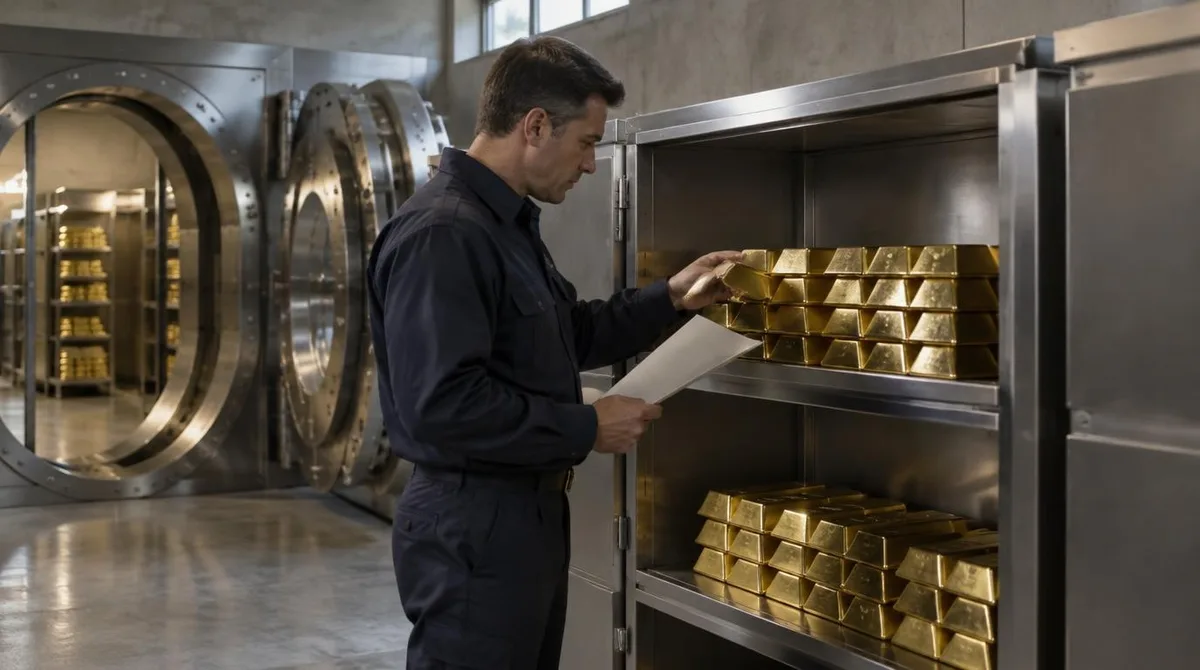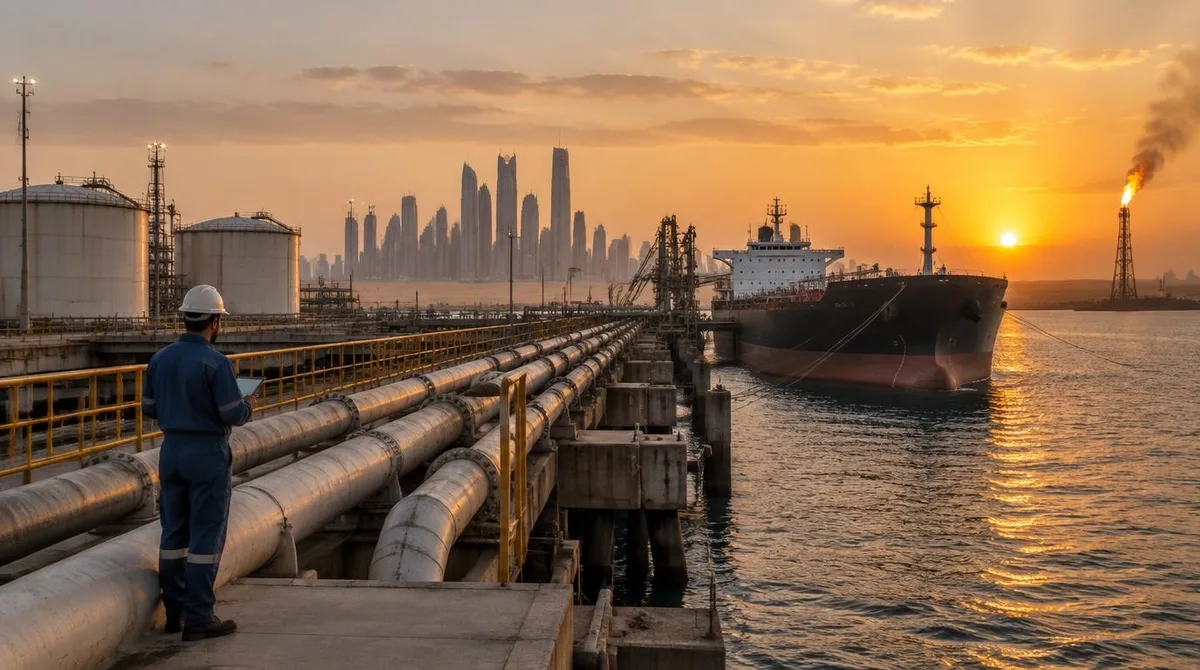
When oil prices rise, the question inside every producing state is the same: where should the money go? Part of it is spent now, part is saved for a future without oil, and part is handed to a sovereign wealth fund — a state-owned investment vehicle that turns today's crude sales into tomorrow's income. The split between those three uses is one of the most consequential fiscal decisions a resource government makes.
The question is live again. Goldman Sachs commodity analysts now expect Brent crude to average $105 in December and stay elevated into next year, according to OilPrice.com, and the major oil companies' quarterly results show how much cash is moving: ExxonMobil reported $15.4 billion in third-quarter profit and Chevron $9.9 billion, both sharply higher than a year earlier. For exporting governments in the Gulf and beyond, that price environment means revenue arriving faster than budgets can absorb it — which is precisely the moment sovereign wealth funds are built for.
What is a sovereign wealth fund, in plain terms?
A sovereign wealth fund is a government-owned pool of money invested in assets rather than spent directly. Think of it as a national savings account with a professional manager. The state deposits revenue — most often from oil and gas, sometimes from other exports or transfers — and the fund buys shares, bonds, property and infrastructure at home and abroad.
The point is not to hide the money. It is to convert a depleting resource into a durable one. A barrel sold today is gone tomorrow; the return on an invested barrel sale keeps arriving. Funds also smooth the budget: when oil prices fall, the government can draw on the fund instead of cutting salaries or infrastructure mid-year. That stabilizing role is why most large funds sit in commodity exporters, and why the biggest ones are concentrated in the Gulf.
Where does the money actually come from — and where does it go first?
Oil revenue does not arrive as a single cheque. It flows through several doors, and the order matters.
First, the national oil company or finance ministry collects the proceeds of exports and domestic sales. Second, the budget takes its share: salaries, subsidies, capital projects and debt service. Third, whatever remains — or a legislated share of the total, depending on the country's rules — is transferred to the sovereign wealth fund. Some states also send revenue directly to the fund and run the budget off the fund's returns, a stricter model that insulates spending from price swings.
The popular assumption is that high prices automatically fill the fund. Mechanically, that is not how it works. The transfer to the fund depends on fiscal rules, not on the oil market. A government facing a large deficit, a subsidy bill or a war contingency can leave the fund untouched even at $100 oil. Conversely, a disciplined state can save in lean years. The fund's size reflects policy choices accumulated over decades, not last quarter's price.
What do these funds actually invest in?
Portfolios vary, but most large funds hold a mix of three broad buckets.
- Foreign financial assets. Listed equities, government bonds and stakes in listed companies. These are liquid, diversified and politically neutral — the fund can sell them quickly when the budget needs cash.
- Direct investments. Stakes in ports, airports, utilities, technology firms and other companies, often bought outright. These earn higher returns but are harder to exit and attract more political scrutiny in the countries where they invest.
- Domestic development. Money channelled into local infrastructure, new industries or flagship projects. This blurs the line between saving and spending: it builds future capacity, but it does not generate an independent return the way a foreign portfolio does.
The balance between the three is itself a policy statement. A fund weighted toward foreign assets is, in effect, a hedge against the day oil demand declines. A fund weighted toward domestic projects is a bet that the state can build a post-oil economy at home. Gulf states currently do both, which is one reason their funds have grown into some of the largest investors in world markets. Readers following this should also see The Gulf's solar mega-projects: who is building what, and at which prices.
What are the risks — and who checks the fund?
Sovereign wealth funds face three recurring problems.
The first is governance. A fund is public money with private-market tools, and oversight varies widely. The strongest funds publish audited annual reports, follow written investment mandates and answer to parliament or an independent board. The weakest lend themselves to projects chosen for politics rather than return.
The second is the temptation to treat the fund as a general-purpose wallet. Every finance minister under pressure — a currency crisis, a subsidy bill, a security emergency — looks at the fund. Rules that specify when the government may withdraw, and how much, are what keep a savings vehicle from becoming an overdraft facility.
The third is the macroeconomic trap known as the resource curse, or Dutch disease. Heavy oil income can push up the local currency and domestic prices, making other exports uncompetitive, while government spending cycles track the oil price. A well-run fund dampens that cycle by parking part of the windfall abroad rather than injecting it all into the local economy.
Our analysis: the fund is less a piggy bank than a shock absorber, and its quality is best judged not by its headline size but by the rules around it. Size tells you how much oil a country has sold. Rules tell you whether the money will still be there when oil stops selling.
Why does this matter right now?
Because the current price environment is testing every part of the machinery at once. According to OilPrice.com, Wall Street banks have raised their oil forecasts as supply fears deepen, with ANZ projecting Brent to end the year around $105 a barrel, and prices have climbed for four straight months as Middle East tensions escalate. Windfalls of that size put pressure on fiscal rules in both directions: finance ministries want to spend, and savers argue the windfall should be banked while prices are high. This connects to our earlier piece, Brent, Murban, OSPs: how Middle East oil is actually priced.
The wider picture sharpens the point. Europe is releasing 42 million barrels of emergency oil stocks over three months to bring fuel prices down before winter, and Japan has decided to tap $7 billion from its contingency reserves to keep gasoline subsidies running. Importers are draining reserves; exporters are deciding whether to fill theirs. The sovereign wealth fund sits at the centre of that asymmetry — the institution that decides whether an oil windfall becomes lasting national wealth or simply a bigger budget this year.
What should a reader watch to judge a fund?
Three things, none of which require a financial degree.
- The fiscal rule. Does the country have a written rule for how much oil revenue goes to the fund and when the government may withdraw? If yes, the fund is more likely to survive a bad decade.
- Disclosure. Does the fund publish audited returns and holdings? Transparency is the cheapest protection against misuse.
- Where the new money goes. A fund buying diversified foreign assets is saving. A fund financing a single domestic megaproject is spending with extra steps. Both can be justified; they are not the same thing.
The evidence from this price cycle so far is that oil money is moving fast — through corporate profits, emergency stock releases and subsidy programmes. What it establishes about sovereign wealth funds is simpler: the mechanism works when the rules hold, and it fails quietly when they do not. What remains unknown, for any specific country, is which of the two is happening until the fund's own accounts say so.