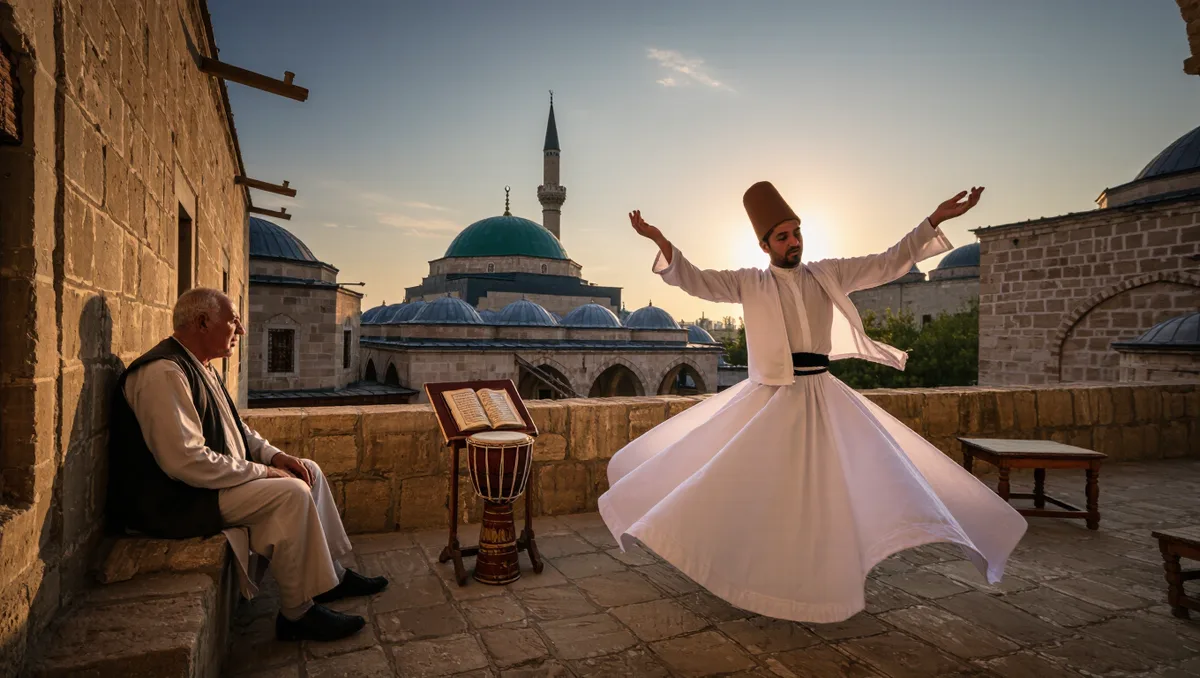
Sufism — known in Arabic as Tasawwuf — is the inner, mystical dimension of Islam, and it shaped far more than private prayer. Over more than a thousand years it produced some of the finest poetry, music and architecture the Muslim world has known, and its orders helped carry the faith from North Africa to South Asia. According to the Islamic Info Center, Sufism is practiced by millions worldwide and is not a separate sect but a path within both Sunni and Shia Islam.
The tradition began in the early centuries of Islam. Early Sufis sought to imitate the simplicity and piety of the Prophet Muhammad and his Companions, and they pushed back against the perceived worldliness of the first Islamic empires. From those beginnings came organized brotherhoods, a vast body of devotional verse, and forms of communal worship — sung remembrance, spiritual concerts, even meditative dance — that still define religious life in many MENA towns today.
What is Sufism, and how does it differ from other strands of Islam?
Sufism focuses on the individual's direct relationship with God. Where legal scholarship governs outward conduct, Sufi teaching aims at the purification of the heart — a goal Muslims call ihsan, or spiritual excellence. Its practitioners, known as Sufis, typically join an order called a tariqa and follow a spiritual guide, or shaykh, through practices such as dhikr, the rhythmic remembrance of God's names.
The tradition's own teachers describe it as a turning inward. As one detailed introduction published by Sufi Philosophy puts it, Sufism is often called the science of the heart: its work is the purification of the soul, the refinement of character, and the inward sincerity that the earliest Muslims prized above outward show. Form without spirit, the masters taught, is empty; spirit without form is rootless.
Who were the early figures who set the tradition's course?
The first clear voices belong to the eighth and ninth centuries. Hasan al-Basri, who died in 728, preached watchfulness against attachment to the world and insisted that outward obedience is worth little if the heart is not sincere. Rabia al-Adawiyya, the great woman saint of Basra who died in 801, set love at the center of the spiritual life; a prayer attributed to her asks God for devotion for His own sake, refusing reward even of Paradise.
Junayd al-Baghdadi, who died in 910, founded what later writers called the sober school. He demanded exact language, calm conduct and close obedience to Islamic law, and his careful teaching on fana — the passing away of the ego's base qualities — became the standard by which later claims were judged. His contemporary al-Hallaj, executed in Baghdad in 922 after an ecstatic public utterance, remains among the most argued-over figures in the tradition, and his fate became a standing reminder of the gap between inner experience and public speech.
How did Sufi orders organize society?
By the medieval period, Sufism had grown from loose circles of ascetics into formal orders built around revered masters. The best known include the Qadiriyya, Naqshbandi, Chishti and Shadhili. These brotherhoods did more than teach prayer. According to the Islamic Info Center, the orders ran schools, carried out missionary work, and played a central role in spreading Islam to South Asia, Central Asia and parts of Africa.
That institutional reach is why Sufism belongs in any account of the region's social history. A tariqa could anchor a neighborhood, fund a lodge and kitchen, and bind guilds and villages into a devotional network. Readers interested in how religious rhythms still organize daily life in the region can see the pattern in how prayer times structure the day across MENA, and in how Ramadan changes working hours across MENA.
What did Sufism give to poetry and music?
The literary legacy is the tradition's most visible face. Ibn Arabi, the Andalusian scholar who lived from 1165 to 1240, built the metaphysical system known as wahdat al-wujud — the unity of being — which holds that independent existence belongs to God alone and that creation's reality is borrowed and dependent. Rumi and Hafiz carried the same ideas into verse that still moves readers in every language, and Rumi's poetry in particular is celebrated worldwide for its account of the soul's longing for God.
Music followed poetry. Sufis practice sama, a spiritual concert of recitation and song, as a means of focusing the inner journey. Its most famous form is the whirling ceremony of the Mevlevi order, whose rotating dervishes turn meditation into visible motion. Architecture carried the tradition too: lodges, tombs and shrines across the region — many now among MENA's grand museums and heritage sites — preserve the material trace of centuries of patronage.
Where does Sufism stand today?
The tradition remains a living force, though not an uncontested one. In recent times it has faced opposition from puritanical movements such as Salafism and Wahhabism, which reject many of its practices. Even so, it continues to thrive, especially in South Asia and parts of Africa, and its shrines and ceremonies remain fixtures of religious life from Morocco to Pakistan.
Sufi ideas also travel through culture rather than controversy. Devotional music festivals, translations of Rumi and museum exhibitions keep the tradition in public view far beyond practicing circles. That cultural afterlife is part of a broader pattern in which belief, art and everyday habit shape one another — a dynamic explored in How Societies Change: The Mechanics of Social Shifts.
What this means for understanding the region
To read MENA's cities, songs and literature without Sufism is to miss a load-bearing wall. The orders shaped who converted, where people gathered and which texts households memorized. The poetry shaped how love, longing and loss could be spoken of at all. None of this requires taking a side in theological disputes; it is a matter of record that the tradition's figures, forms and institutions left a deep imprint. For readers tracing the region's cultural inheritance, Sufism is not a footnote to Islamic history. It is one of the main channels through which that history reached the heart.