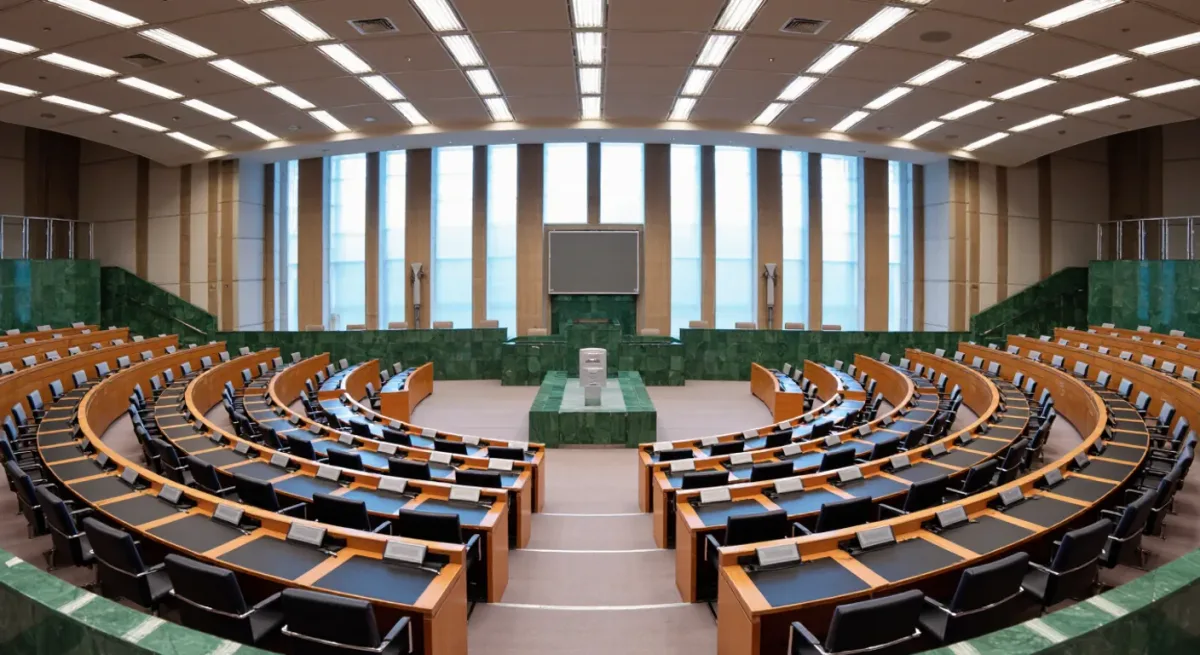
The United Nations General Assembly opens its annual session on September 8, 2026, beginning a month of summit diplomacy that the Iran war has reshaped from the first item to the last. The session convenes six months after the Security Council fell short of fully condemning the US-Israeli assault that opened the war on February 28, ten days after the General Assembly took up demands to end it, and a season after the Council's March 11 demand that attacks by Iran and its proxies on Arab states cease, a paper trail that frames everything the new session will attempt.
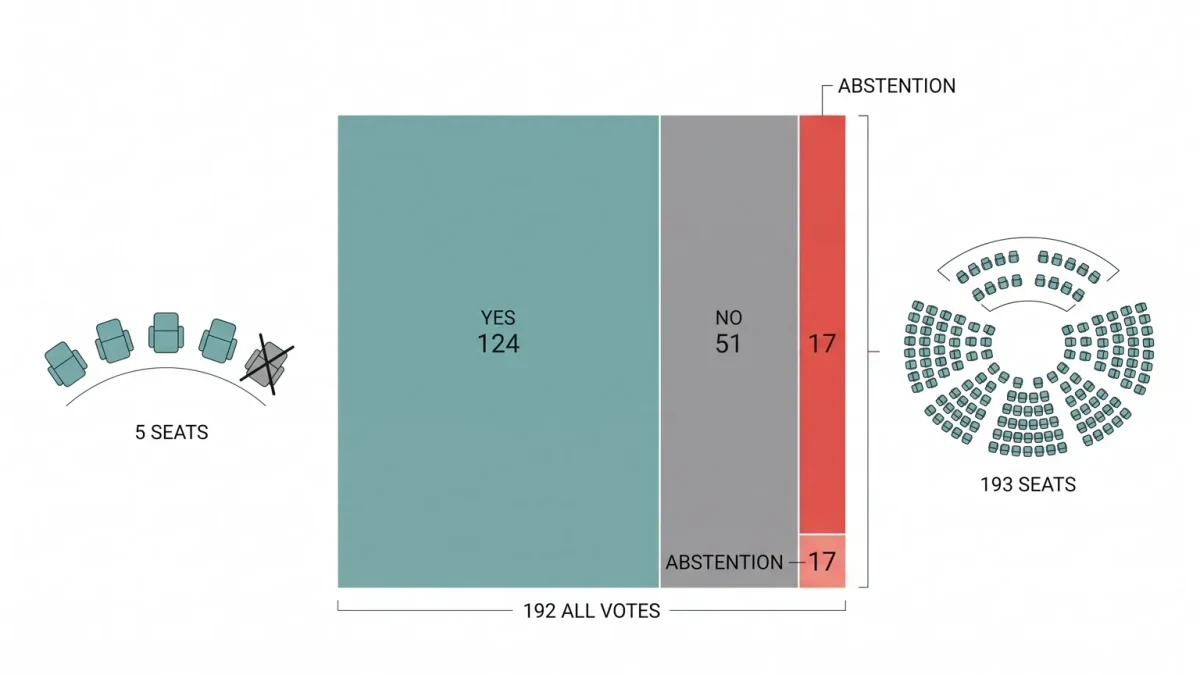
The UN's record through this war is the institution's recent history in miniature. Secretary-General Antonio Guterres said at the outbreak that the strikes squandered a chance for diplomacy and urged a return to negotiations, particularly on Iran's nuclear program, and he repeated the call for a diplomatic push in July after attacks on civilian areas. The Security Council, where veto politics protects the belligerents' principals, produced the March 11 resolution on proxy attacks and the extension of the Red Sea shipping-attack reporting mandate through mid-January 2027, but nothing on the war's core. The General Assembly's March session demanded an end to the war by large majority, as the Assembly's resolutions do, without the binding force their votes imply.
What this session inherits
The diplomacy of the pause gives the session its live agenda. The strike pause that began in late July has held; the strait remains open-by-declaration and blockaded-in-fact; the Saudi-led Red Sea coalition has assembled a regional security structure the UN did not build; and the reconstruction bill, from Qatar's LNG complex to the war's civilian damage, has no funding framework at all. The high-level addresses later in the month will deliver the war's full cast to New York, and the session's procedural calendar, the committee sessions that run to December, will grind through the follow-ups: the sanctions questions, the compensation questions, and the annual ritual of the Assembly's Palestine-related votes now reframed by Gaza's post-ceasefire governance arrangements.
| UN marker | Date |
|---|---|
| Council fails to fully condemn the assault | February 28, 2026 |
| Assembly demands an end to the war | March 4, 2026 |
| Resolution 2826 extends Red Sea reporting | July 14, 2026 |
| Secretary-General's renewed diplomatic call | July 2026 |
The agenda items to watch
- The strait settlement: any framework language on the Hormuz blockade's normalization, the single variable that moves the world economy's war bill.
- Reconstruction financing: the Gulf states' capital against the region's repair needs; expect proposals for a UN-adjacent trust fund structure of the kind previous conflicts produced.
- Accountability files: the war's conduct questions join existing investigations, Sudan's among them, on the Council's crowded docket.
- Peacekeeping and missions: mandate renewals across the region arrive in a year when the US naval drawdown has already shifted security burdens.
What the region expects from it
For MENA governments, the session has three practical functions. Legitimacy: the Assembly's chamber is where mid-sized powers bank their narrative of the war, and the speeches are drafted accordingly. Money: the reconstruction and compensation frameworks that eventually finance repair begin as UN language. And insurance: the region's states want the diplomatic season to give the pause durability, converting a mutual quiet into arrangements with names, monitors and timelines, because the region's economic planning, from Suez's recovering transits to Europe's winter gas, is built on the assumption that the quiet holds. The Assembly cannot deliver any of this by vote; it can only host the process, which is precisely what it will spend September doing.
The honest baseline for expectations is the institution's own record this year: a Council that condemned nobody's opening blows, an Assembly that demanded everything and bound nothing, a Secretary-General whose appeals both sides quote selectively. The session that opens September 8 begins its work in that shadow, with the war paused but not ended, and the season's real business conducted in the bilateral rooms where the belligerents' intermediaries meet.
The Assembly's limits, precisely
Understanding what the session can and cannot do calibrates every expectation. The Assembly cannot order a strait opened, a blockade lifted or a ceasefire enforced; its resolutions express the membership's weight without binding anyone, and its two-thirds-majority machinery has produced a long shelf of demanded-but-undelivered outcomes across the decades. What it can do is real but procedural: convene the belligerents' foreign ministries in the same corridors, adopt the language that future legal settlements will cite, credential and fund the agencies that manage the war's human consequences, and provide the neutral rooms where the pause's diplomacy hardens into arrangements. The General Debate's speeches, twenty-odd hours of them, function as the year's most-watched audit of each government's war narrative, and the region's states invest their addresses accordingly. The session's real work happens in the bilateral schedule the public never sees, which is why the diplomats' September is measured in meetings-per-day, and why the corridor traffic between the delegations' hotels matters more than anything said at the podium.
The session's first days will supply the early tells: which foreign ministers travel, which corridors host which pairings, and whether any language on the strait survives from speech drafts into the negotiated texts, the small machinery that precedes every settlement this institution has ever hosted.
That distinction, between the stage and the machinery, is the one seasoned observers will keep in mind through September's speeches.
For the oil-market posture entering that season, read our report on OPEC+'s October hold and the quota talks ahead, and browse the world news section for continuing coverage.