Luxor is built on and beside the ruins of ancient Thebes, roughly 650 kilometers south of Cairo, and the Nile splits it into two different visits. The east bank holds the living city, Karnak and Luxor Temple; the west bank holds the necropolis, the Valley of the Kings, the mortuary temples and the villages between them. Current headline prices: Karnak at 600 Egyptian pounds, Luxor Temple at 500 and the Valley of the Kings at 750 including three standard tombs, per the Ministry of Tourism and Antiquities schedules, with many ticket offices now taking cards rather than cash.
East bank: Karnak and Luxor Temple
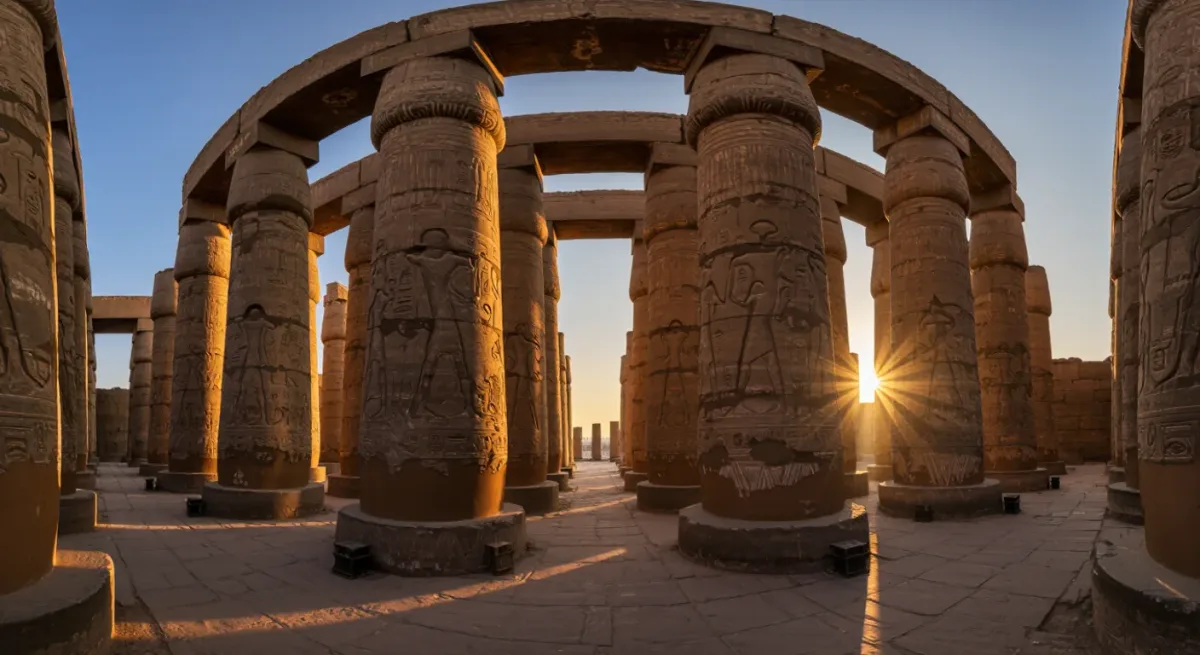
Karnak is the largest religious complex built in the ancient world, and it is measured in centuries of construction rather than single reigns. The practical visit runs two to three hours: the avenue of sphinxes, the great hypostyle hall of 134 columns, the obelisks of Hatshepsut and Thutmose, and the open-air museum annex ticketed separately for the reconstructedchapels. Go at opening or in the final two hours; the hypostyle hall at midday is one of the least forgiving spaces in Egypt.
Luxor Temple sits in the middle of the modern town, joined to Karnak by the 2.7-kilometer stone avenue of sphinxes now excavated along most of its length. It is the rare monument that improves after dark, when lighting dramatizes the colonnades and the fusion of pharaonic, Roman and mosque layers, the Abu al-Haggag mosque still standing inside the precinct. Most itineraries place it in the early evening, which also puts you in the downtown restaurant strip at the right hour.
West bank: the tombs and temples
The west bank is a half-day minimum and a full day done properly. The Valley of the Kings ticket covers three standard tombs of your choice from the open rotation; the tombs of Tutankhamun, Seti I and Ramesses VI require separate, costlier tickets, and the rotation exists because the department of antiquities rests decorated tombs in cycles. The small tram from the visitor gate to the tomb entrances costs 60 pounds. Two rules do the most work: read the open-tomb board at the gate before choosing, and pace yourself in the deep descents, where humidity and low ceilings tax visitors more than the walking distance does.
Around the valley sit the rest of the necropolis: the terraced mortuary temple of Hatshepsut at Deir el-Bahari, the Ramasseum and the giant seated colossi of Memnon on the plain road. Ticketing for these is separate and priced lower than the three headline sites. A workable west-bank day: valley at 7 a.m., Hatshepsut before the tour buses complete their arrival, one more temple, then lunch in a west-bank village restaurant, which costs half of its east-bank equivalents and overlooks green fields the temples once farmed.
| Site | Entry (foreign adult) | Notes |
|---|---|---|
| Karnak Temple | EGP 600 | Open-air museum annex separate |
| Luxor Temple | EGP 500 | Best after dark |
| Valley of the Kings | EGP 750 | Three standard tombs; extras separate |
| Valley tram shuttle | EGP 60 | Gate to tomb entrances |
| Hot-air balloon flight | ~US$80–100 | Dawn departures, west-bank launch sites |
The balloon window
Luxor runs one of the world's most active balloon operations because the west-bank skies are calm at dawn nearly year-round. Flights launch in the half-light before sunrise, drift over the necropolis and the river for 45 minutes to an hour, and land on the west-bank fields by 8 a.m., in time for a full tomb day. Book through operators based in Luxor rather than anonymous resellers, confirm the insurance and pilot licensing terms in writing, and expect the price band around 80 to 100 dollars with hotel pickup. Winter mornings are cold aloft; the flight itself is not weather-canceled for heat but for wind, and the decision comes before dawn on the day.
Seasons, river and logistics
Luxor is one of the driest inhabited places on earth, which concentrates the calendar hard. October to April is the workable season, with November to February the peak: days in the mid-twenties, nights genuinely cold on the water in January. From May the heat builds toward the high forties in June and July, hotel rates fall accordingly, and the standard day inverts to tombs at opening and temples after 4 p.m. Felucca and motorboat sunset rides on the Nile are the standard evening activity, priced by negotiation on the east-bank corniche.
Transport between banks runs on the road bridge, the railway-adjacent vehicles and the local passenger ferry that crosses in minutes for a few pounds; most visitors staying east use the ferry for west-bank mornings. Cruise boats running the Luxor-Aswan stretch dock in ranks along the east bank, and their schedules explain the 10 a.m. congestion waves at Karnak. Three-day visits are the comfortable standard: one east-bank day, one west-bank day and one for Deir el-Medina, the workers' village, and the museums, including the mummification museum on the corniche. Cairo is an hour by air or an overnight sleeper train, and the sleeper is part of the journey's appeal rather than a compromise.
Where to stay and how to sequence
East-bank hotels along the corniche put you walking distance from Luxor Temple and a short ride to Karnak; west-bank guesthouses in the villages among the tombs trade convenience for atmosphere and lower prices, and suit travelers who want to be at the Valley of the Kings for the 6 a.m. opening. The standard sequencing follows the sun: west bank in the morning while the tombs are cool, east bank temples in the late afternoon and evening when Luxor Temple performs best. Cruise-boat passengers do the reverse on a compressed schedule, which explains the mid-morning congestion waves. Nile-side restaurants and rooftop cafes cluster on the east corniche; west-bank eating runs through village kitchens at half the price. Three- and four-night stays are the sweet spot: two for the archaeology, one for the museums and the river at leisure, and a spare morning for the balloon flight that weather postponed.
More seasonal planning for Egypt and the wider region sits in our companion guides elsewhere in MENA and across the travel and heritage section.