Startups across the Middle East and North Africa raised capital on a structure borrowed wholesale from Silicon Valley, pre-seed, seed, Series A through C, priced by equity or bridged by convertible instruments, but the money behind it is regional in a specific way: Saudi and Emirati state-linked funds anchor the larger rounds, diaspora and development finance fill the earliest, and the exits that define the asset class have been a handful of landmark acquisitions rather than public listings. Understanding the stack explains most of what a founder or investor encounters from Cairo to Riyadh.
The rounds and who writes them
Pre-seed and seed money in the region comes predominantly from angel networks and the accelerators: Flat6Labs, founded in Cairo in 2011 and now running programs across the region, is the archetype, alongside 500 MENA-descended vehicles and country-level programs. Series A onward is the terrain of the regional funds of record, whose limited partners are increasingly Gulf institutions: Saudi Venture Capital Company (SVC), a Public Investment Fund subsidiary established to deepen the kingdom's venture market, Saudi Technology Ventures-linked vehicles, Abu Dhabi's Hub71 with its incentive packages for relocating startups, and the Dubai ecosystem anchored by DIFC's fintech structures. Development finance, the IFC, EBRD and the regional development banks, participates selectively with both capital and governance standards.
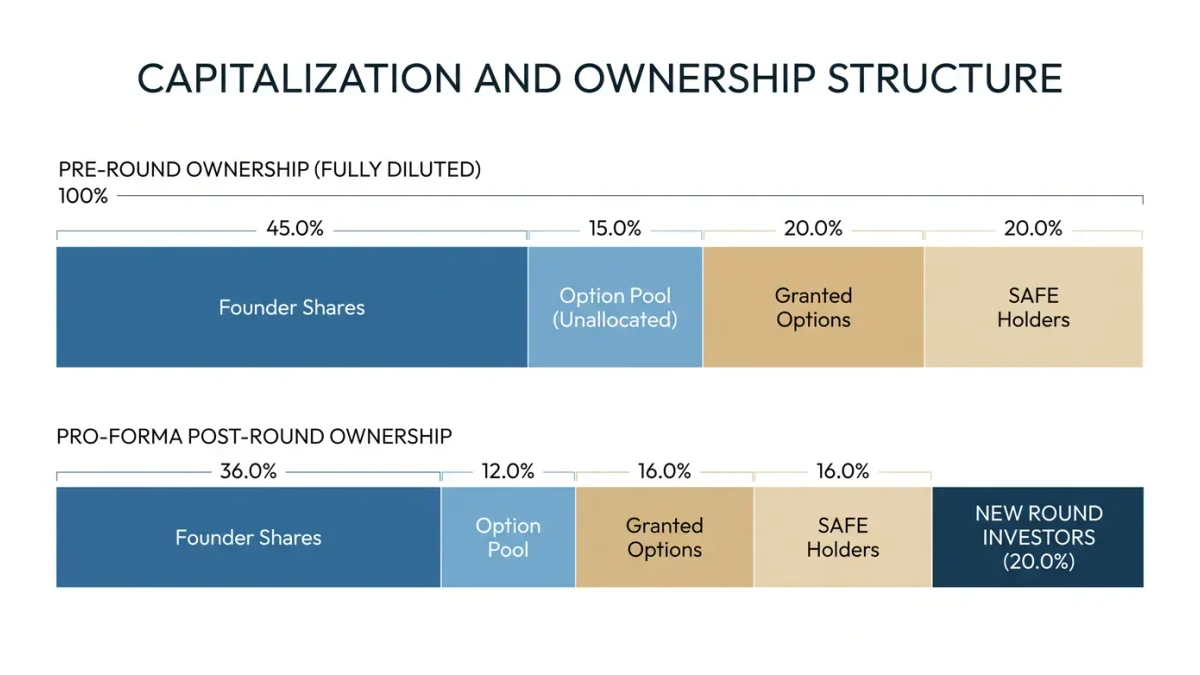
The instrument stack mirrors global practice. Convertible notes and SAFEs dominate pre-seed, priced equity from seed onward, and the occasional venture-debt line from the regional tech banks fills working-capital gaps. What differs is founder geography: a company incorporated in Delaware or Abu Dhabi's ADGM with a Dubai or Riyadh operating entity is now the standard architecture, chosen for investor familiarity and currency stability, which is itself a data point about regional banking integration.
What the money builds
Sector concentration is sharp. Fintech has taken the largest share of regional venture dollars for several years running: payments and lending, the buy-now-pay-later leaders Tabby and Tamara became the region's homegrown fintech unicorns in 2023, e-commerce enablement, and the infrastructure plays around digital payments licensing. Behind it sit delivery and mobility, the Careem lineage, SaaS serving the region's SMEs, and the healthtech and edtech cohorts that expanded on post-pandemic tailwinds. The kingdom's giga-project economy has begun producing its own category, construction-tech and tourism-tech startups selling to NEOM-adjacent demand, and Gulf sovereign interest in AI has followed the global wave.
| Landmark | Year | Why it mattered |
|---|---|---|
| Careem acquired by Uber | 2019 | $3.1 billion; the region's defining exit |
| Swvl lists on Nasdaq | 2022 | First MENA tech unicorn via SPAC |
| Tabby and Tamara reach unicorn valuations | 2023 | Homegrown fintech, Gulf consumer base |
The cycle the ecosystem actually had
Regional venture funding peaked in 2021 with a record year by every measure, contracted through the 2022-2024 global reset, and reorganized around Riyadh as the fastest-growing pool of capital. The structural facts survived the cycle: the region's young demographics and under-digitized services still generate the demand case, smartphone commerce penetration still leads the world in the Gulf, and the funding gap at growth stage still sends the strongest companies abroad for late rounds. The 2021 peak's excesses, delivery startups with negative unit economics raising at consumer-internet multiples, unwound exactly as they did everywhere else, and the investors who stayed disciplined through it are the ones deploying into the current base.
Exits, and the absence of them
The exit record is the ecosystem's honest weakness. Careem's 2019 acquisition by Uber for $3.1 billion remains the benchmark; Swvl's 2022 Nasdaq listing via SPAC made it the first MENA tech unicorn to list in New York, and its post-listing struggle illustrated the cost of the region's thin domestic listing path. The Egyptian and Saudi exchanges have talked up startup listings, and Tadawul's Nomu parallel market has taken a few technology names, but the realistic exit for a regional startup remains acquisition by a regional conglomerate, a global platform, or increasingly a Gulf corporate building capability. For limited partners, this makes MENA venture a private-market asset class with elongated cycles, and it explains the weight of strategic corporate capital in the larger rounds.
For founders approaching the market
- Choose the anchor geography deliberately: Saudi, UAE and Egypt carry different capital pools, licensing costs and customer currencies; the CEO's residency question is a funding question.
- Price in dollars where possible: revenue in volatile currencies has been the region's quiet startup killer more than once.
- Use the accelerators for networks, not just cash: the regional market runs on introductions between a small set of repeat investors.
- Plan the sovereign angle: procurement and giga-project demand from state-linked customers is now a genuine growth channel, with its own sales discipline.
Where the checks actually clear
The banking geography behind the rounds is its own layer. Fund domiciles cluster in Delaware, ADGM and DIFC for the investor-friendliness that cross-border limited partners require, while operating entities sit in the founders' markets, and the intercompany plumbing between them, licensing fees, transfer pricing and repatriation, is a standard early hire for the CFO or the firm that plays one. Currency is the standing constraint: funds write dollar checks into companies earning pounds, dinars or riyals, and the 2022-2023 devaluation cycle repriced every Egyptian startup's metrics overnight, a lesson the funds priced into subsequent term sheets through currency-adjusted valuations and hard-currency revenue requirements. Exit escrow and earn-out structures run through the same hubs. For founders, the practical advice that recurs from the practitioners: incorporate where your investors are comfortable before the Series A conversation, keep the IP in the same box as the money, and bank where the custody of both is routine, because the region's best companies have been undone by corporate plumbing far more often than by competition.
For the state-backed capital side of the same story, read our guide to Morocco's Casablanca investment economy, or browse the business and economy section.