Morocco's pitch to international business is unusually concrete: a kingdom with free-trade agreements covering the European Union and the United States, an industrial base that has made it Africa's largest car exporter, a financial center regime in Casablanca for regional headquarters, and a currency, the dirham, that trades in a managed band rather than free float. For companies entering, the practical geography runs through Casablanca for finance and services, Tangier and Kenitra for manufacturing, and Rabat for the state interface.
The FTAs and what they buy
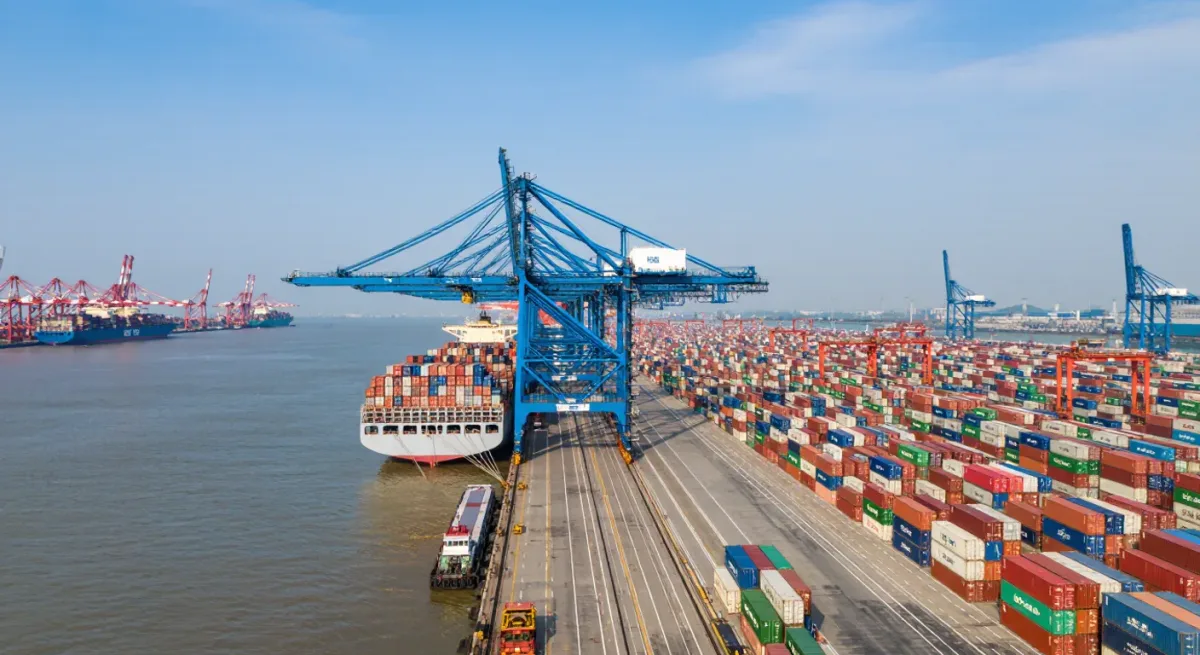
Morocco holds association agreements with the EU dating to 2000, a free-trade agreement with the United States in force since 2006, and Agadir-area and African arrangements that cumulate rules of origin across the region. For a manufacturer, this is the whole story: a car wired in Kenitra or Tangier enters the European market under preferential terms, and the logistics, Tangier Med port a short sail from Algeciras, have made the straits corridor one of the busiest industrial shipping routes in the world. The port's expansion phases have tracked export growth, and the free zones around it, Tangier Free Zone and the adjacent automotive clusters, hold the supplier parks of the major programs.
The industrial base
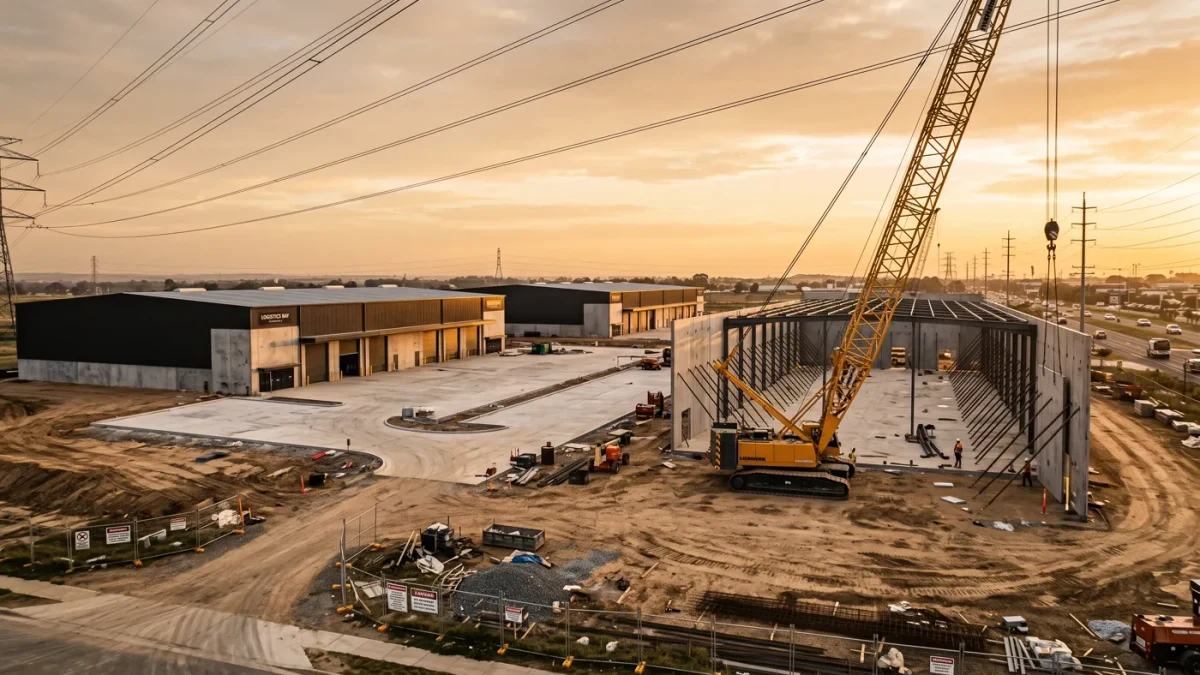
Automotive is the anchor. Renault's Tangier plant, opened in 2012, and Stellantis's Kenitra facility lead an ecosystem that exports the bulk of its output, producing several hundred thousand vehicles in strong years with a supplier network that has deepened from assembly toward cabling, seats, powertrain components and battery-adjacent investment. Aerospace is the second pillar: a cluster of more than a hundred companies around Casablanca, Nouaceur's Midparc free zone among them, supplies structures, composites and machining to the global primes, built on Moroccan training pipelines that the sector cites as its competitive core. Offshoring and nearshoring services, francophone call centers and engineering services, form the third leg, concentrated in Casablanca and Rabat.
Casablanca Finance City
The Casablanca Finance City, launched in 2010 and operated by the Casablanca Finance City Authority, is the headquarters regime: companies approved as CFC status holders, regional HQs, holding companies, finance and professional-services firms serving the region, receive reduced corporate tax rates on qualifying activities, foreign-exchange facilitation, and administrative fast-track, in exchange for substance requirements in the Casablanca area. The status is the standard vehicle for multinationals running West and Central African operations from Morocco, and the banking groups, insurers and fund managers under CFC umbrellas make Casablanca the francophone region's financial hub by default. Applications run through the authority with a defined eligibility matrix by company type.
| Pillar | Geography | Anchor facts |
|---|---|---|
| Automotive | Tangier, Kenitra | Renault 2012; Stellantis Kenitra; Africa's largest car exporter |
| Aerospace | Casablanca, Midparc | 100+ companies supplying global primes |
| Offshoring | Casablanca, Rabat | Francophone services and engineering |
| Finance | CFC, Casablanca | HQ regime since 2010; reduced CIT on qualifying activity |
The state interface and incentives
The investment promotion agency, operating the Morocco Now brand under the ministry of industry and commerce, runs the incentives: the investment charter framework provides sectoral premiums and regional development bonuses, with enhanced support for the southern and eastern provinces, and the agency assembles the permits, land and utility connections for industrial projects. The legal system is a French-descended civil-law framework with commercial courts that practitioners treat as functional for ordinary corporate matters; enforcement timelines and the currency's managed band are the two caveats that appear most often in investor documentation.
Practical entry sequence
- Market study through the agency: Morocco Now's sector teams handle introductions and site visits as a standard service.
- Structure: a SARL, the Moroccan LLC, for operating entities; the CFC holding for regional structures.
- Banking: the Office des Changes regime governs capital import and repatriation; CFC status eases the FX mechanics for qualifying firms.
- Staffing: engineering and technical graduates from the country's public schools anchor the industrial base's productivity claim; labor law is protective and standard for the Maghreb.
- Timeline: industrial projects with site and incentives typically assemble in months, not years; services entries in weeks.
What to watch
The dirham's band-widening, agreed with the IMF and phased in recent years, is the macro variable for anyone holding dirham-denominated returns; drought cycles matter to the wider economy; and the kingdom's positioning as the gateway to West African markets rises and falls with security conditions along the Sahel corridors. None of these change the base case, which is the region's most export-integrated non-oil economy, and the entry formalities rank among the more navigable in the region.
The entry sequence in practice
A market entry runs through a recognizable sequence. The investment agency's sector teams assemble site visits and incentive matrices in the first weeks; the CRI, the regional investment centers, are the one-window interface for approvals, and their performance varies by region, with the Casablanca-Settat and Tangier-Tetouan offices the most practiced. The CFC application proceeds in parallel for regional structures, with the authority's eligibility review running a few weeks. Labor onboarding runs through CNSS, the social security registry, with employment contracts deposited rather than negotiated individually; the code du travail is protective, with severance scales and procedure that multinationals learn to budget rather than fight. Banking onboarding asks for the same beneficial-ownership file as anywhere, plus the Office des Changes declaration that ties the capital account together. The realistic timeline from decision to operating industrial entity with incentives is measured in months; for services entities in the CFC, weeks. The failure mode is the same everywhere in the region: treat the incentives as the strategy rather than the seasoning, and discover that the market's fundamentals, logistics, labor and trade access, were the strategy all along.
For the Gulf's counterpart to the state-capital story, read our explainer on how MENA startup funding works, and browse the business and economy section for the rest of the map.