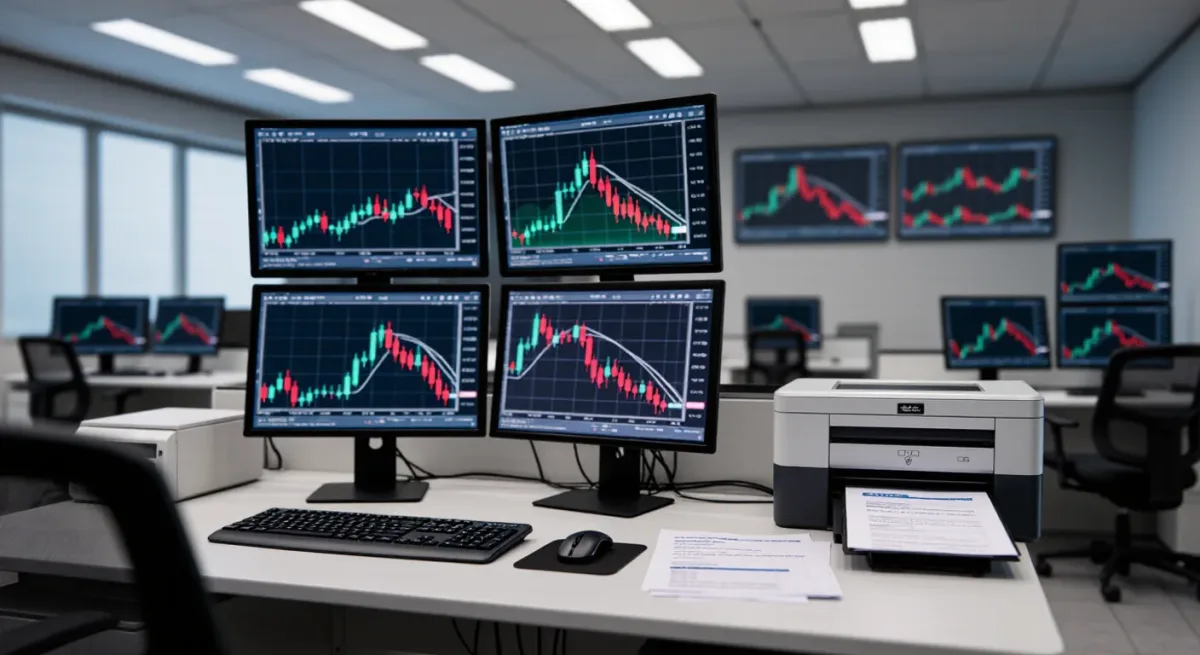
The Egyptian Exchange in Cairo is one of the oldest bourses in the emerging-market universe, with roots in the 1880s Alexandria and Cairo exchanges, and it is fully open to foreign retail investors. The practical entry sequence: open an account with a licensed local broker, obtain an Egyptian tax identification number, connect a custody arrangement through a local bank or the broker's custody arm, and fund the account in hard currency through the banking system. Execution is then ordinary electronic trading in the same blue chips that move the EGX30 every session.
What the market actually is
The EGX operates two lists, the main market and the Nile Exchange for small caps, with trading Sunday through Thursday, the Egyptian working week. The EGX30, the headline index, tracks the thirty most liquid names, and its composition explains most of the market's character: Commercial International Bank has long dominated the index weight, alongside real-estate developers, consumer and pharma names, and the materials and fertilizer producers tied to Egypt's gas. The market's celebrated trait is low correlation with developed markets; its demanding trait is that it prices in Egyptian pounds, and the currency is part of the trade.
Opening the account, step by step
- Choose a broker. The EGX publishes its member list; international investors typically route through the brokerage arms of the major local banks and investment banks, which also provide custody.
- Documentation. Passport, proof of address, and the account forms; the broker files for the tax identification number required for trading codes.
- Custody and settlement. Settlement runs T+1 through Misr for Central Clearing, Depository and Registry (MCDR); institutional investors appoint a custodian bank, retail investors usually rely on the broker's custody arrangements.
- Funding. Wire funds in through the banking system; conversions to Egyptian pounds happen at the prevailing interbank rate. Repatriation of sale proceeds works through the same channel, subject to standard documentation.
Costs are modest and published: brokerage commissions in the tens of basis points, a small stamp duty on trades, and MCDR fees. Dividends and capital gains attract withholding for foreign investors at rates published by the Egyptian Tax Authority, with double-taxation treaties shifting the numbers for many residencies.
The currency question, which is the whole question
Foreign investors in Egyptian equities are implicitly running two positions: the stock, and the pound. Egypt's macro decade, the 2016 float under the IMF program, the repeated devaluations of 2022-2023 that moved the pound from roughly 15-19 to beyond 45 to the dollar, then the Ras El Hekma megadeal inflows of 2024 and the subsequent stabilization attempts, has meant that hard-currency returns have often diverged sharply from the pound returns the index prints. The practical consequence: track the EGX30's dollar-converted return when evaluating performance, and understand that sharp EGP appreciation episodes can be as disruptive to a hedged position as devaluation is to an unhedged one.
What moves this market
- Rates: the Central Bank of Egypt's policy rate, which swung through hiking cycles above 27 percent before easing, anchors valuations for leveraged developers and banks.
- The IMF program: review milestones, disbursements and the attached reform conditions, FX liberalization, state divestment, drive the risk premium.
- State offerings: the government's program of stake sales in listed and state-owned companies, which periodically reshapes the free float and index composition.
- Gulf inflows: deposits and investments from Saudi, Emirati and Qatari institutions function as macro events for the pound and the market alike.
- Regional shocks: Red Sea shipping disruption and Suez Canal receipts feed directly into the external accounts the market watches.
A starting framework for beginners
For a first position, the standard route is via the largest banks and consumer names, whose reporting is in English, whose free floats are deep and whose liquidity makes position sizing and exit unproblematic. Position sizing should assume currency volatility: a stock that returns 20 percent in pounds in a year the currency loses 15 is a different investment than the local chart suggests. Egypt-dedicated funds and ETFs listed offshore offer the exposure without the custody legwork, at the cost of management fees and occasionally wide premiums to net asset value when flows surge. Timers of the macro cycle, IMF reviews, rate peaks, have historically mattered more than stock pickers in this market, and the beginners who do best are usually the ones who size for that fact.
Practical pitfalls and how locals handle them
The operational wrinkles are few but consistent. Dividend handling runs through MCDR's records, and address changes that investors forget to file are the classic cause of unclaimed distributions. Trading codes tie to the tax file, so passport renewals that change the transliterated name need a broker visit to reconcile before trading resumes. Settlement of repatriated proceeds is where the process meets Egypt's FX reality: documentation trails proving the funds' inbound conversion make outbound transfers routine, and gaps in that trail make them slow, which is the single most common complaint in the investor forums. On strategy, the market's own history instructs humility on timing: the EGX has produced multi-year dollar-indexed drawdowns and recoveries of equal scale, local-currency rallies that hedged positions missed and devaluations that unhedged ones absorbed in full. The investors who compound here treat the currency as a position to size, keep the custody paperwork current, and let the market's famous volatility work for entries rather than against sleep.
None of this is investment advice; it is the map of the process. For the region's other major market structures, read our explainer on Gulf tax rates and what they fund, or browse the business and economy section.