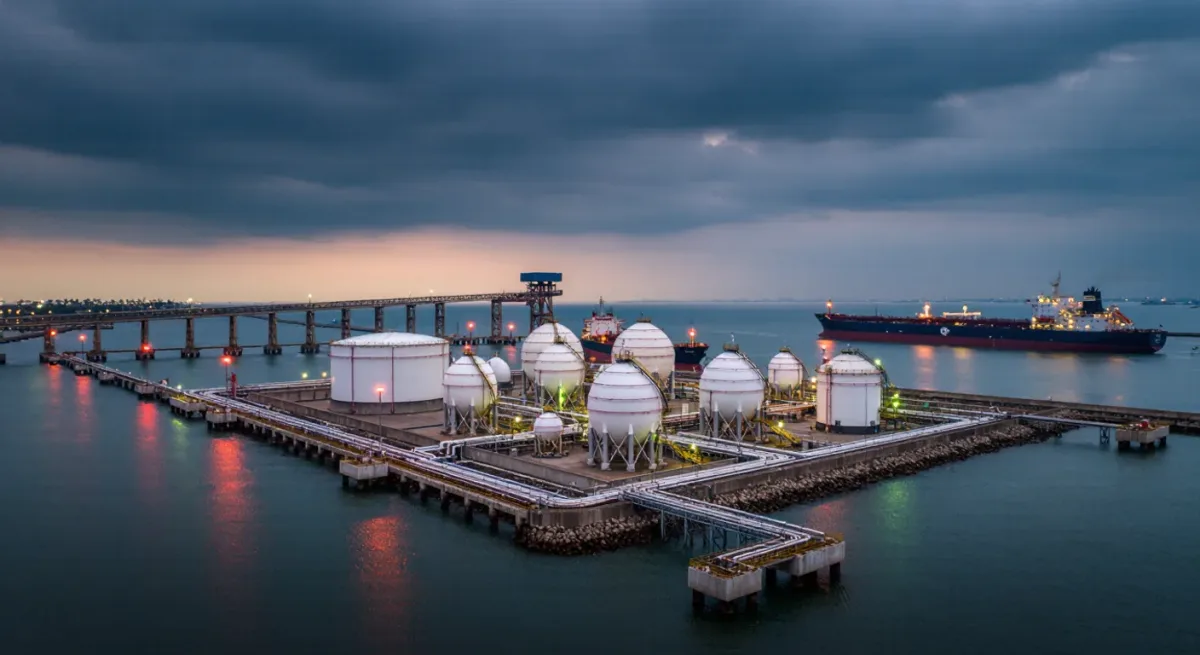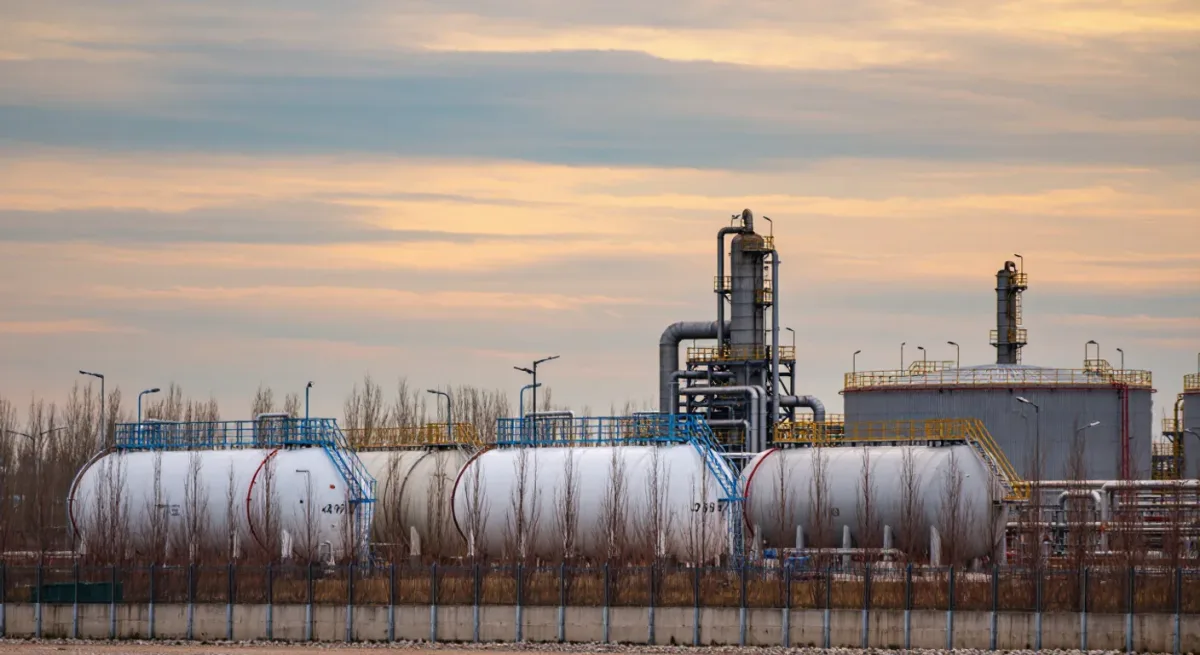
Europe's gas storage has fallen to its lowest level in 13 years, The Guardian reported on August 29, 2026, an inventory position that converts the Iran war's LNG losses directly into the continent's winter heating bill. The European Union's standard refill target of 90 percent of storage capacity has been softened to a more flexible band around 80 percent for this year, per tracking of the bloc's storage rules, and analysts' scenario pricing for a cold winter now runs from 90 to 120 euros per megawatt-hour and beyond.
The arithmetic behind the shortfall is the war's supply ledger. Qatar's damaged liquefaction capacity, roughly a sixth of the world's largest LNG export base knocked out for years, has removed cargoes from the Atlantic market precisely when Europe's refill season needed them. The Gulf-side chokepoint constraints have complicated the LNG trade's routing. And the Asian buyers, China, India, Japan and Korea above all, have bid for the barrels and molecules that remain, pulling cargoes east: Europe would need to attract well over 140 LNG vessels per month through the autumn to reach even the softened target, and the tankers are going to Asia instead (Euronews, August 20).
How the target was softened
The EU's storage regulation, written in the aftershock of 2022's Russian supply shock, obliges member states to fill storage to 90 percent, on a country-by-country schedule running to the start of December. This year's reality forced flexibility: with the refill season's imports running at 2025 rates, analysis by the EU's Agency for the Cooperation of Energy Regulators found the 80-percent level achievable but the 90-percent target requiring roughly 13 percent more LNG imports than last year, volumes the disrupted market does not offer at prices the industry will pay. The softened band is less a policy choice than an accounting surrender to physics and freight.
| Marker | Status |
|---|---|
| Storage level | Lowest in 13 years (Guardian, Aug 29) |
| Refill target | 90% softened to ~80% band |
| Cargoes needed for 80% | 140+ LNG vessels/month, Aug-Oct |
| Cold-winter price scenarios | €90-120/MWh and above |
The MENA connection
For Sala News's region, the European shortage is the demand side of the year's central supply story. Qatar's Ras Laffan damage, assessed by QatarEnergy at three-to-five-year repair horizons, removed the swing supplier Europe's post-2022 system was built around, and every cubic meter of the shortage prices the Gulf's reconstruction urgency. Algeria and Egypt, the pipeline and LNG suppliers facing Europe from the south, hold stronger hand positions than at any point in a decade: Algeria's pipeline flows into Spain and Italy carry scarcity value, Egypt's idle liquefaction at Idku becomes the region's most valuable processing asset if East Mediterranean gas can feed it, and Israel's offshore output gains a European market case through the same plumbing. Morocco's pipeline position and the broader North African renewable-export agenda ride the same price signal.
What winter now depends on
Three variables will set the continent's heating-season outcome. The weather: a mild winter turns the storage shortfall from crisis into cost, a cold one activates the price scenarios analysts have published. The strait: any normalization of Gulf LNG logistics, the difference between the paused war and a settled one, releases cargoes into the Atlantic basin. And demand management: the European Commission's toolbox of consumption-reduction measures, industrial switching and the political tolerance for both, is the continent's last lever. The comparison season is 2022, and by the storage numbers alone, the starting position this time is worse; what differs is the market's adaptation, the diversified supply base, the demand flexibility and the LNG import capacity built since, which is why the continent's planners speak of a hard winter rather than an impossible one.
The global echo
The storage race is also the clearest window into the war's global redistribution. Energy's marginal molecule has moved east, Asia's premium bids setting the clearing price, and Europe competing with demand it cannot outbid at every political threshold. The India-Japan stockpiling cooperation signed in July institutionalizes the Asian side of that competition. And the eventual reconstruction of Qatari capacity, when it comes, will land in a market that has already rebuilt itself around its absence, which is the longest shadow the war casts over the energy transition's sequencing, in both directions at once.
The tools Europe has left
The continent's remaining instruments define the winter's best case. Demand-side measures, the consumption-reduction mandates and industrial switching protocols proven in 2022, can bridge several percentage points of the storage gap if activated early rather than after the first cold snap. The market's own price does part of the work, curbing power-sector gas burn where coal and import capacity allow substitution, though the environmental accounting that governed 2022 is now politically contested in several capitals. The import infrastructure is the continent's genuine strength: the regasification terminals built since 2022 give the system the physical ability to land any cargoes it can win, and the question is purely price competition with Asia. Reserve mechanisms, joint purchasing platforms and the solidarity rules that route scarce molecules to storage-poor member states, exist in EU law and will be tested politically if the winter turns cold. The planners' summary has been consistent since August: the winter is manageable if mild or moderately cold, painful if cold, and the difference between those scenarios is what the autumn's cargo bidding decides.
For the chokepoint ambiguity at the center of that uncertainty, read our report on the strait declared open but blockaded, and browse the world news section for continuing coverage.