Egypt, Morocco, Jordan and the Gulf all sell versions of the same trip: dunes at sunset, a camp, tea by the fire. The question is not whether desert tours middle east operators offer are worth taking. It is which ones leave the desert, and the people who live in it, better off. The honest answer is that the visitor decides, mostly by asking a handful of questions before booking.
The desert itself is more fragile than the postcards suggest. According to the National Geographic Society, deserts are areas receiving no more than 25 centimeters of rain a year, cover about one-fifth of Earth's land area, and are home to around 1 billion people — one-sixth of the world's population. Dunes, the part most tours photograph, cover only about 10 percent of the world's deserts. The rest is rock, gravel, salt flat and mountain, and much of it recovers slowly from tire tracks and trampling.
What does sustainable actually mean in the desert?
It means three things at once, and a tour that delivers only one of them is not delivering sustainability. The first is environmental: vehicles stay on established tracks, camps are temporary or purpose-built rather than sprawling, waste leaves with the group, and wildlife is watched rather than chased. The second is economic: money reaches the community that hosts the trip, not just a booking platform and a city agency. The third is cultural: the visit treats residents as hosts with their own schedules and boundaries, not as scenery.
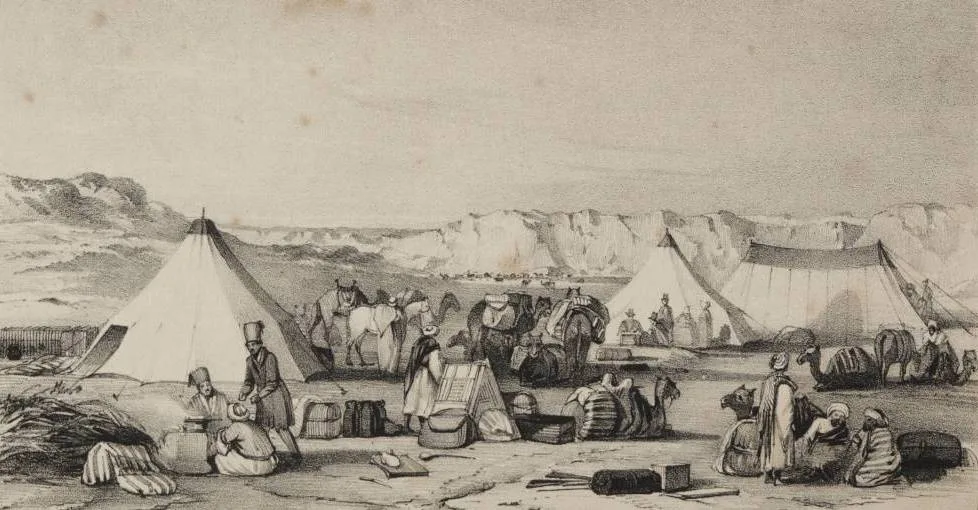
The National Geographic Society's education resource makes a point worth carrying on any trip: people have adapted to life in the desert for thousands of years, and most deserts are far from empty. That framing matters. A Bedouin host in Wadi Rum, a Amazigh guide in the Moroccan Sahara or a Nubian operator near Aswan is not part of the backdrop. The best tours are built around that fact, and the worst ones ignore it entirely.
Who actually runs the trip?
This is the single most useful question a visitor can ask. A tour marketed in Marrakech or Dubai may be owned, staffed and provisioned by people who have never set foot in the dunes it crosses. Before booking, ask who the guides are, where they are from, and whether the camp employs local staff year-round. A company that answers plainly — named guides, named villages, a camp the community built — is usually a company worth paying.
Where the answer is vague, treat it as information too. Some of the region's best-known desert destinations have long-standing local guiding traditions, and established community-run options exist alongside the large operators. Choosing one is often the difference between a tourism income that stays in the region and one that passes through it. The same logic applies across a whole trip: a visitor weighing costs in Morocco, for example, can see how accommodation, transport and guides stack up in a working Marrakech budget before deciding where the desert leg fits. We covered a connected angle in Marrakech medina guide: what to see, what things cost and how not to get lost.
What should a visitor ask before booking?
A short list covers most of it. These questions are reasonable to put to any operator, and the answers are usually revealing.
- How many vehicles go out per departure, and do they follow fixed routes?
- Where does the camp's water and waste go?
- Are the guides from the area, and what share of the price stays with them?
- Is there any interaction with local families, and is it arranged with them rather than staged for cameras?
- What happens in bad weather or a heat warning — is the itinerary flexible?
Operators with genuine local ties answer these without hesitation. Operators that deflect have answered anyway.
When is the best time to go, and what does the desert actually demand?
Timing drives both comfort and impact. The region's deserts span an enormous range: the National Geographic Society notes that while some deserts reach daytime temperatures as high as 54°C, others have cold winters or stay cold year-round, and that deserts are classified into five types by the cause of their dryness — subtropical, coastal, rain shadow, interior and polar. The Sahara is a subtropical desert, which is why its summer months are punishing and its shoulder seasons are when responsible operators run their fullest schedules.
Summer heat is not just uncomfortable. It stresses the animals a tour might encounter, strains water supplies at small camps, and pushes some operators to cut routes short. Travelling in cooler months spreads visits more evenly and gives guides a steadier season. Season-by-season planning is already second nature elsewhere in the region — the same thinking applies to Jordan's Petra and its desert fringes, where the best months shape the whole itinerary. For related coverage, see When is the best time to visit Jordan? A season-by-season answer.
What can a single visitor actually change?
More than it might seem, because desert tourism in the region is competitive and operators respond to what guests reward. A visitor who tips the guide directly rather than through a middleman, who declines the offered ride over a dune field in favour of walking it, who asks where the water comes from — each choice is small, but operators notice what gets asked. Group size is the lever with the clearest environmental effect: fewer vehicles mean fewer tracks, less noise and a smaller claim on a camp's water.
What this means in practice: sustainability in desert tourism is less about certification logos and more about the structure of the money and the behaviour on the ground. A trip where the guide is a neighbour, the camp is the community's, and the vehicles keep to old tracks is a sustainable trip even if nobody uses the word. A luxury camp with a sustainability page and none of those features is not.
Where desert tourism is heading
The direction of travel across the region is toward more visitors and thinner margins for error. The National Geographic Society's resource also describes desertification — non-desert drylands degrading into desert-like conditions — and aridification driven by climate change, a process it says has turned formerly humid areas into drylands in recent decades. Tourism does not cause that shift, but fragile dryland environments give every track and every camp a longer shadow than the same footprint would cast elsewhere.
The practical takeaway for anyone planning a desert tour in the Middle East or North Africa is simple. Ask who runs it, ask who profits, go in the cool season, keep the group small, and treat the people who live there as the hosts they are. The desert has supported communities for millennia. A well-chosen tour lets it keep doing so.