Carthage and Sidi Bou Said form the standard day trip out of Tunis because the geometry favors it: the ancient sites sit on a hillside on the Gulf of Tunis, the village caps the cliff next to them, and the seaside TGM tram connects the whole run from the capital in under half an hour. The working plan: a multi-site Carthage ticket covering the main ruins for around 12 dinars, the Bardo Museum in Tunis at about 15, and Sidi Bou Said itself free to walk, with March to June and September to November the comfortable coastal windows.
Getting out there: the TGM run
The TGM light rail line leaves Tunis Marine station, between the medina and the port, and runs along the northern shore through La Goulette, Carthage and on to La Marsa, the turn-of-the-century beach suburb at the end of the line. Trains run frequently through the day, the fare is a fraction of any taxi equivalent, and the stations map exactly onto the itinerary: Carthage-Hannibal or Carthage-Amilcar for the museum and cathedral area, Carthage-Salammbô for the Antonine Baths by the sea, Sidi Bou Said station for the village, and La Marsa-Plage for the coffee stop at the end. Buy tickets at station windows and keep small change.
Carthage: what the ticket covers
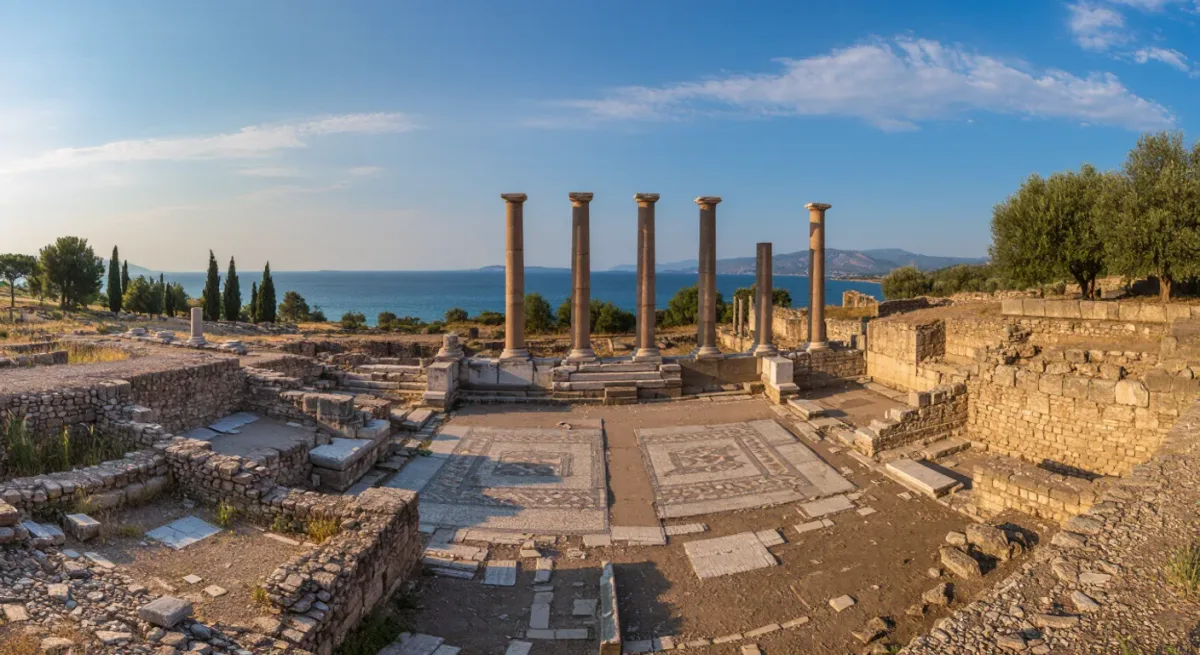
Carthage is not one monument but a spread of excavated zones across a residential hillside, and the combined ticket, sold at each staffed site, covers the set: the Antonine Baths on the shoreline, among the largest bath complexes of the Roman world and the site's visual anchor; the Carthage National Museum on Byrsa Hill with the best panoramic view over the excavations and the gulf; the Punic houses and Tophet sanctuary; the Roman villas and theater; the amphitheater and the Punic ports, whose outlines are still readable from the air. Realistically the full set wants a full day on foot with climbs; the two-hour minimum runs the baths and Byrsa, which is the pair most visitors remember.
What the ticket does not include is equally practical: the pale Saint-Louis Cathedral on Byrsa Hill, now an arts venue; the excavated areas inside private grounds; and the Lac de Tunis flamingo spectacle visible across the water in winter. Photography permits cost a symbolic extra dinar at some staffed gates. Reports through 2025 indicate some fee restructuring under discussion for the national monuments network, so confirm the current combined price at the first gate rather than relying on older guides.
The Bardo first, or not at all
The Bardo National Museum in Tunis holds the world's largest collection of Roman mosaics, largely lifted from Tunisian sites including Carthage itself, and it reframes everything you then walk through. It closes Mondays, opens Tuesday to Sunday from about 9 to 5, and charges foreign visitors around 15 dinars. Two hours is the honest minimum, organized around the great Carthage-floor mosaics, the Virgil panel and the marine rooms. Taking the TGM out to Carthage after a Bardo morning is the classic full day; doing the Bardo on a separate morning is kinder.
Sidi Bou Said
The village above the sites is a dense cluster of white walls, blue doors and bougainvillea on a clifftop site protected by preservation rules dating to 1915, among the earliest urban heritage protections in the region. The main street climbs from the TGM station to the lighthouse viewpoint over the gulf; the parallel lanes five minutes off it run quiet at all hours. The fixed stops are the Ennejma Ezzahra palace-music center at the base of the village and the Cafe des Natters with its terrace perched over the cliff, but the working attraction is the walk itself, best in the last two hours of daylight. The village fills hard on weekends and in July-August; weekday mornings are the calm version.
| Item | Cost / hours | Note |
|---|---|---|
| Carthage combined ticket | ~12 TND | Covers all main zones; cash preferred |
| Bardo Museum | ~15 TND | Tue–Sun, closed Mondays |
| Sidi Bou Said | Free | Cafes and palace-museum priced separately |
| TGM day return | A few TND | Tunis Marine to Carthage / Sidi Bou Said |
Seasons and practical notes
The Tunis coast is a Mediterranean calendar rather than a desert one. March to June and September to November deliver 18-to-27-degree days suited to walking both the ruins and the village lanes; July and August push into the thirties with domestic and European beach traffic at full volume; winter days sit in the mid-teens, damp but workable, with the Lac de Tunis flamingos as compensation. Dress and cash norms are straightforward: cards are unreliable at monument gates, so carry dinars, and conservative clothing is the working default in the residential streets around the sites.
Sequencing the day
The sequencing that works best runs the Bardo first, on the morning it opens, because its mosaic halls reward a fresh start and the trip out to Carthage lands after the midday museum rush. Take the TGM after lunch, start at the Antonine Baths by the sea while the light is still high, climb to Byrsa and the museum for the late-afternoon view, and end in Sidi Bou Said for the last two hours of daylight, when the blue doors photograph best and the cafe terraces empty before dinner. The reverse order puts the village in the harsh noon light and the ruins in the dark, which is the classic first-timer's mistake. Travelers with a second day should give it to Tunis itself, the medina and the Zitouna quarter, and move Carthage to a half-day pace with the La Marsa corniche and its patisseries as the afternoon's end point. Restaurants cluster in La Goulette, the seafood strip on the canal halfway back to Tunis, which doubles as the dinner stop the itinerary rewards.
Tunis itself deserves the overnight rather than the day-trip treatment, with the medina's UNESCO-listed core and the Zitouna mosque quarter; most travelers base two or three nights in the capital and run Carthage as the middle day. For more of the region's classical and coastal sites, see our guide to visiting Saudi Arabia on a tourist visa next, or browse the whole travel and heritage section.