Syria's transitional government reaches the middle of 2026 with the country's political transition judged to be advancing, against heavy odds, by the analysts watching it. A July 15 intelligence brief from the Soufan Center records an administration pursuing political reforms and seeking foreign engagement and investment even as security challenges persist; the standing facts beneath the assessment are the January 2026 ceasefire between interim President Ahmed al-Sharaa's government forces and the Syrian Democratic Forces, the country's formal entry into the US-led Global Coalition to Defeat ISIS, and a constitutional drafting process that the interim parliament's work must feed (Soufan Center; Congressional Research Service; UK Commons Library briefings).
The arc since the Assad government's fall in December 2024 has been faster than the region expected and slower than Syria needs. The interim administration consolidated control of the state's organs, navigated the shocks of the regional war erupting around it, and converted its counterterrorism cooperation into a measure of international legitimacy, sanctions relief packages and reconstruction contact groups among them.
Where the transition stands
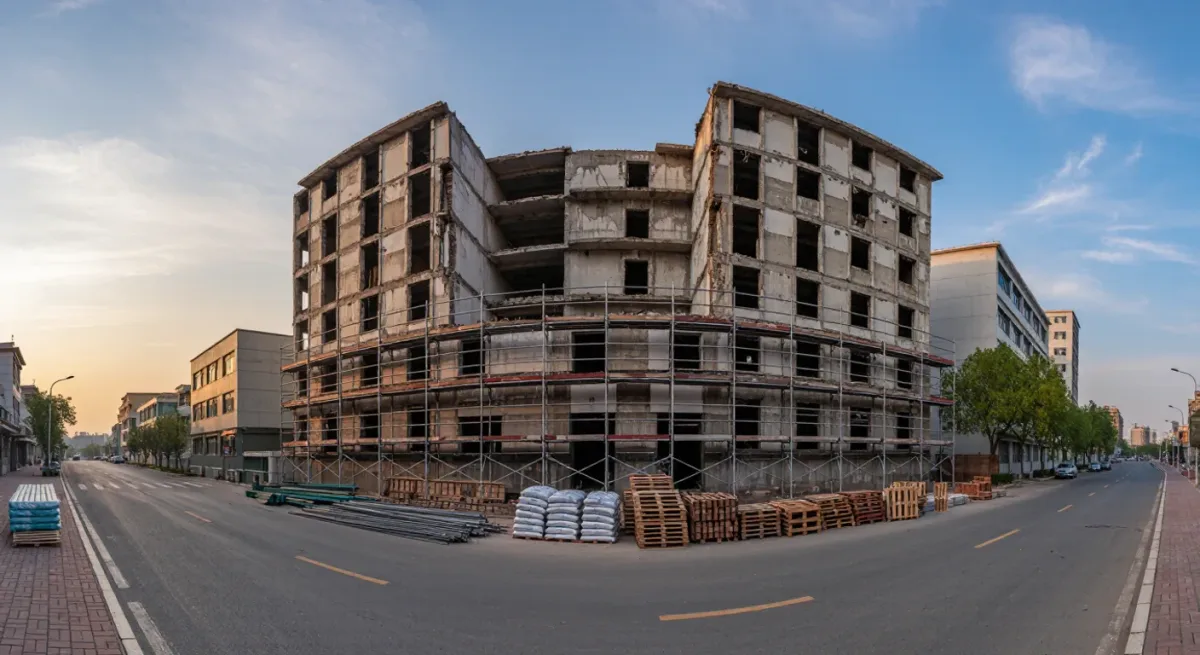
The political file is the spine. The January ceasefire with the SDF, the Kurdish-led force holding the northeast, committed both sides to integration talks that the interim parliament's formation was designed to carry forward, and the Commons Library's 2026 briefings record the Kurdish integration steps proceeding alongside the constitutional process. The economic file is the constraint: reconstruction needs are counted in the hundreds of billions, the electricity and housing stock remains devastated, and European asylum statistics, roughly 17,300 Syrian applications between October 2025 and May 2026 per the EU asylum agency's reporting, measure how few have judged return viable. The security file is unfinished: ISIS cells persist in the desert seams, factional consolidation is incomplete, and the south and coast have seen episodic violence through the period.
The war next door
The Iran war has cut across Syria's transition in contradictory ways. The Gulf-led attention and capital that might have begun reconstruction flows have been diverted to the war and the region's energy repairs; the reinsurance environment prices Syrian projects as war-adjacent regardless of their local reality. At the same time, Damascus's alignment with the coalition against Tehran-aligned actors has drawn it closer to the Gulf states and Washington, accelerating the sanctions-relief and recognition track that the transition's economic plan depends on, and Israeli strikes on remaining weapons infrastructure, which Syrian officials protest and the Council briefings keep on the agenda, continue to define sovereignty limits the transition has not yet escaped.
| Milestone | Date | Status |
|---|---|---|
| Assad government falls | December 2024 | Transition begins |
| SDF ceasefire | January 2026 | Holding, integration talks under way |
| Global Coalition membership | 2025-2026 | Counterterrorism cooperation |
| Constitutional drafting | Ongoing 2026 | Interim parliament feeding process |
The economics of return
The transition's political metrics matter because the economic ones are brutal. Syria needs everything rebuilt, power, housing, schools, hospitals, and the finance available so far, Gulf pledges, diaspora remittances and early commercial deals, runs at a fraction of assessed needs. The return calculus for the millions displaced abroad turns on services and consular access, and the asylum statistics show the arrow moving slowly: applications in Europe fell from their peaks but remain substantial through May 2026. The government's investment courtship, trade missions to the Gulf, property and industrial frameworks for diaspora capital, is the transition's most tangible economic policy, and its credibility rests on the security consolidation that remains the open file.
What the rest of 2026 holds
Four markers will grade the transition's second half. The constitutional text: a draft that survives consultation would be the transition's first irreversible political asset. The Kurdish integration agreement's implementation: defense and border arrangements that hold in practice, not just paper. The sanctions track: whether the relief packages widen from humanitarian carve-outs into reconstruction finance. And the regional war's endgame: a settlement that reopens Gulf capital flows would change Syria's arithmetic more than any single policy Damascus controls. The Soufan brief's formulation, reforms pursued amid persistent security challenges, is the honest scorecard at midyear: a state being rebuilt while the region around it burns, judged not against perfection but against the alternative it replaced.
The investment courtship in practice
The government's economic outreach has a concrete shape beyond communiques. Damascus has hosted trade delegations from the Gulf states and Turkey, structured a commercial law framework to recognize pre-2011 property and contract claims, and set up investment offices to process the diaspora capital that returns first, family remittances upgrading to apartment blocks, workshops and small industry. The energy file illustrates the pattern: Syria's damaged refining and power infrastructure attracts interest from the same Gulf and Turkish contractors rebuilding elsewhere in the region, but financing waits on the sanctions carve-outs and the insurance market's willingness to price Syrian risk at something other than war-adjacent premiums. Agriculture, the country's recovery quick-win, runs on inputs and water pumping that the electricity system cannot yet deliver at pre-war scale. The honest scorecard is that the transition has built the interface for investment faster than the conditions investment requires, and the midyear test is whether security consolidation, the south above all, closes that gap before the patience of the interested capital moves on.
The transition's second year, in other words, will be graded less on process than on electricity hours, bread prices and the first visibly rebuilt neighborhoods, the currencies in which Syrians have kept score of every government they have had.
For another front in the region's redrawn map, read our report on the Houthi naval blockade declared against Saudi Arabia, and browse the MENA news section for continuing coverage.