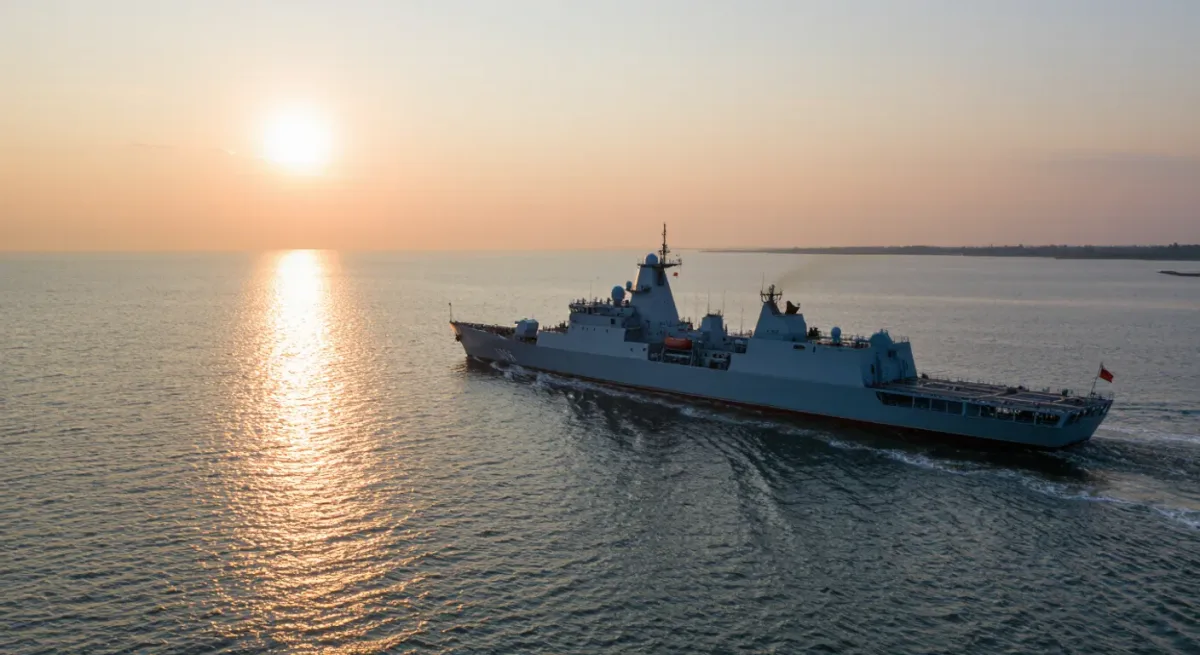
The United States abruptly suspended its air strike campaign against Iran over the last weekend of July, Tehran held its fire in response, and oil prices fell more than 5 percent at the start of the trading week, settling at their lowest in over a week as traders priced the pause as space for diplomacy over the strait (Reuters, July 26; Euronews and The Guardian, July 27, 2026). France 24 reported the pause was intended to give space for renewed talks, and US officials framed the suspension around conditions for reopening the Strait of Hormuz.
The move ends, at least provisionally, five months of the most destructive campaign the region's energy infrastructure has absorbed in the modern era. Since February 28, the war has closed the strait, disabled a sixth of Qatar's LNG capacity, and imposed a supply disruption the International Energy Agency called the largest in the history of the oil market. A pause is not a peace: the naval blockade posture around the strait continues, the damage to infrastructure remains, and the diplomacy the pause is meant to enable has a long list of unsettled questions.
What the pause consists of
By the reporting of the weekend and Monday morning, the suspension covers the US air campaign against Iranian targets, with Iran refraining from strikes in turn, an arrangement closer to a mutual quiet than a negotiated ceasefire. The US president's public framing tied continued restraint to Iran's reopening of the strait, and the Euronews and France 24 coverage described the pause as buying room for diplomatic tracks to resume after months in which negotiations existed mainly as public positioning. No document has been published, no timeline confirmed, and both capitals retain the capability to resume at hours' notice.
| War marker | Status |
|---|---|
| US air campaign | Suspended late July |
| Iranian strikes | Paused in response |
| Strait of Hormuz | Closure declared by Iran; reopening the negotiating subject |
| Naval blockade posture | Continues |
What the market did with it
The oil market's verdict was immediate: Brent fell more than 5 percent, extending a retreat from a two-month high set the prior week, and settled at its lowest level in over a week (Reuters; The Guardian). The mechanics of the move are the war premium unwinding, not the war's costs reversing. The disruption premium built since February, the fear barrel priced on escalation scenarios, deflates when those scenarios narrow. What the price retains is the physical reality: Gulf export capacity remains constrained, Qatari LNG remains damaged, and the insurance regime around the chokepoints remains at wartime levels. Analysts' baseline through the pause, per the coverage, holds prices far above the pre-war low seventies even under successful diplomacy.
What diplomacy must now solve
The agenda the pause opens is the war's entire balance sheet. The strait's reopening, sequencing with the naval blockade posture that the US has maintained, is the first item; compensation and reconstruction questions for the infrastructure destroyed, Ras Laffan above all, follow; Iran's nuclear program, the original casus belli of the February strikes, remains the file beneath the files; and the region's proxy fronts, the Houthi blockade of Saudi Arabia declared weeks earlier among them, would have to be stood down in any comprehensive settlement. The diplomatic history of this war, failed bridges and public ultimatums, counsels caution about timelines; the market's own pricing, still far above February's levels, shares that caution.
For the region, a waiting economy
The pause's immediate economic effect runs through the price channel: cheaper crude lowers the inflation tax the war imposed on every importing economy in the region, Egypt, Morocco, Tunisia, Jordan and Turkey included, and eases the freight and insurance costs that have squeezed every port from Suez to Casablanca. The Gulf exporters, paradoxically, take the price fall with relief, since their volume constraint, not their price, has been the war's binding cost, and any path toward reopened export routes is worth more than the premium. The reconstruction economy, insurance assessors, engineering surveys, cargo rebookings, begins its calculations the moment the quiet holds for weeks rather than days.
The diplomatic machinery now in motion
Behind the pause's market move, the region's intermediaries have shifted into the tempo that precedes real negotiation. Oman's channel, the quiet Gulf state's standing role as US-Iran interlocutor, and Qatar's parallel contacts came public in fragments through the week, and the agenda being shuttled is the war's whole settlement structure: the strait's reopening sequence, the naval posture's reduction, compensation and reconstruction files, and the nuclear program that began the confrontation. The UN's secretary-general has offered the institution's good offices for a formal track whenever the parties accept, and the General Assembly's September season gives the diplomacy a stage whether it wants one or not. History's counsel is caution: this war has already produced one truce that collapsed into the summer's escalation, and the pause's durability will be judged in weeks of quiet, not days of headlines. But the market's own verdict, the premium unwinding without collapsing, is the collective judgment that something has changed in the war's momentum, and markets have been early before.
The next markers are procedural: whether technical teams meet before the month ends, whether the strait's transit count rises off its single-digit floor, and whether the pause survives its first enforcement incident, each a harder test than the pause itself.
For the war's opening and the supply shock that began it, read our report on the widening maritime fronts, and browse the MENA news section for continuing coverage.