Iranian attacks on Qatar's Ras Laffan industrial complex have knocked out about 17 percent of the country's liquefied natural gas export capacity for as long as five years, according to QatarEnergy assessments reported by Reuters on March 19, 2026, converting the war's energy front from a shipping disruption into a destruction of the world's most important LNG processing hub. The Emirates simultaneously shut gas facilities amid the escalation, and Iran warned it would show what its officials described as zero restraint if its infrastructure were struck again (Reuters; Al Jazeera; Arab News).
The strike on Ras Laffan followed an Israeli strike on Iran's South Pars offshore gas field, the field that feeds Iran's own domestic network and its export ambitions, and Iran's retaliation targeted energy infrastructure across the Gulf in response. Qatar described extensive damage at the complex, and the scale implied by the 17-percent figure, against a Qatari export base of roughly 77 million tonnes per year, means global LNG supply has lost the equivalent of a major producing nation in a single exchange.
What Ras Laffan is
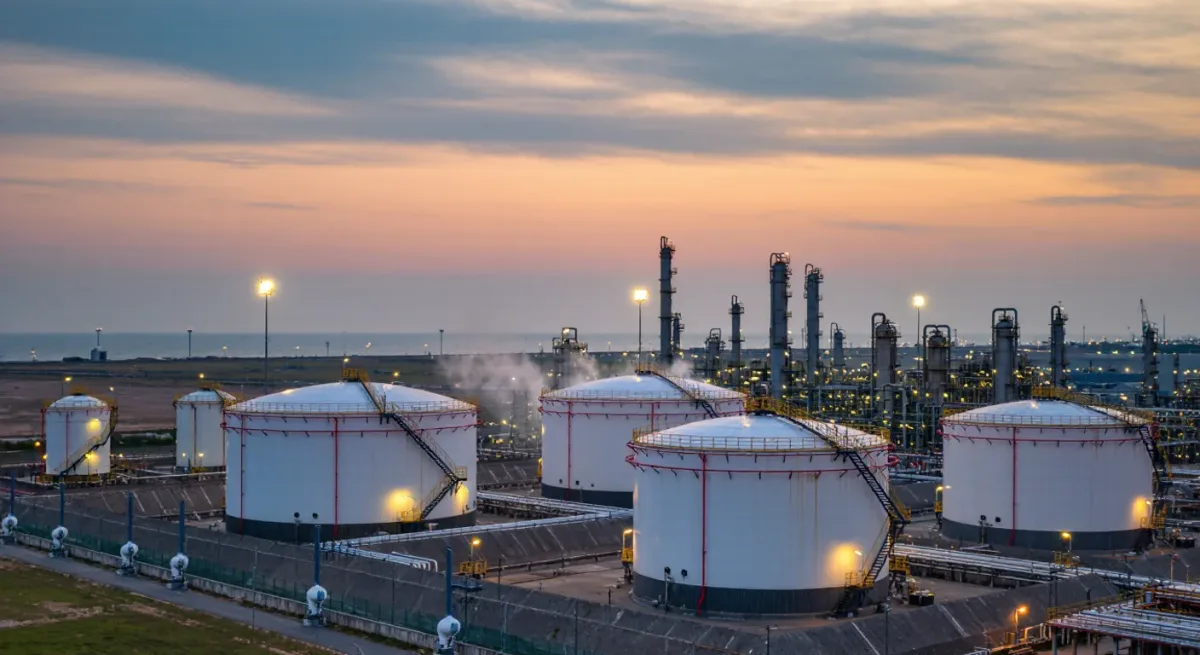
Ras Laffan on Qatar's northeast coast is the world's largest LNG export complex: the terminal and processing city where Qatari gas from the North Field, the largest gas field in the world shared with Iran as South Pars, is liquefied into cargoes that supply roughly a fifth of globally traded LNG. Qatar's position in the market is unique in its contract structure as well as scale: decades-long supply agreements with Asian and European buyers underpin the country's state finances, and its recent expansion program, the North Field East and South phases lifting capacity toward and beyond 140 million tonnes by decade's end, was the industry's largest single investment program. That expansion program now shares geography with the damage.
| Fact | Figure |
|---|---|
| Capacity knocked out | ~17% of Qatar's LNG export base |
| Repair horizon per QatarEnergy | 3-5 years |
| Estimated annual revenue loss | ~$20 billion |
Who takes the hit
The contract map determines the blast radius. Asian buyers, China, India, Japan and South Korea above all, take the largest volumes of Qatari LNG and face the immediate shortfall into a market already squeezed by the Hormuz closure's effect on Gulf cargo movement. European buyers, which signed long Qatari contracts through the 2020s as the continent restructured away from Russian pipeline gas, now hold paper claims on molecules that cannot be liquefied, and the continent's winter planning begins with replacement purchases in an illiquid spot market. The price mechanics are unforgiving: spot LNG had already repriced violently on the strait closure, and the loss of liquefaction capacity removes the supply that would eventually have capped it.
The Gulf's energy infrastructure era
The strategic fact that the strike establishes is that the Gulf's export infrastructure, built on the assumption that shared commercial exposure deters attack, is inside the wartime target set. Energy facilities across the region have been attacked in past confrontations, the 2019 Abqaiq strike above all, but the deliberate, assessed, multi-year disablement of the world's largest LNG hub is a different category of event. Every Gulf producer's insurance mathematics changes: war-risk cover for processing infrastructure, already repriced by the strait closure, now prices destruction rather than interruption, and the region's project financing costs follow. The UAE's precautionary shutdowns of its own gas facilities mark the same recognition.
What comes next
Three timelines now run in parallel. The repair timeline, QatarEnergy's three-to-five-year assessment, will be contested by engineering realities: liquefaction trains are long-lead equipment, and the global fabrication capacity for replacement modules is limited and booked years ahead. The market timeline runs faster, with cargo diversions, contract force-majeure declarations and replacement buying through 2026. And the military timeline determines whether more of the region's energy map joins the damaged list; Iran's zero-restraint formulation and the allied response to it frame that arithmetic, and the naval blockade posture around the strait continues regardless of pause negotiations.
The repair problem in engineering terms
Rebuilding liquefaction capacity is a different discipline from building it new, and the timelines QatarEnergy's assessment implies are the industry's standard arithmetic. A liquefaction train is a chain of cryogenic heat exchangers, compressors driven by gas turbines and the steel-and-concrete that contains them; the main exchangers are fabricated by a handful of specialized workshops with order books measured in years, and the global fleet of spare modules is thin because no operator ever expected to lose several at once. Damage assessment itself takes months: a struck train must be depressurized, purged, inspected metallurgically before the repair scope is even defined, and the war's continuation complicates the surveyors' access. The optimistic path, repair and recommissioning of partially damaged trains inside the three-year window, assumes the fabrication queue and the security conditions both cooperate; the pessimistic path, full train replacement on a five-year horizon, matches the assessments reported. The global context sharpens it: the same fabrication capacity that Qatar needs is what every other expanding producer, the United States above all, has booked, and the queue-jumping that Qatar's contracts and capital can achieve is itself a market event other importers will price.
Force majeure declarations on the affected supply agreements followed the assessments, sending buyers into the spot market that the war had already thinned.
The strike also rewrote the region's insurance season: energy infrastructure renewals across the Gulf now carry war exclusions priced against Qatar's loss experience, and the brokers' word for it is a new benchmark.
For the war's opening supply shock, read our report on the Hormuz closure and the oil surge it triggered, and follow the energy section for continuing coverage.