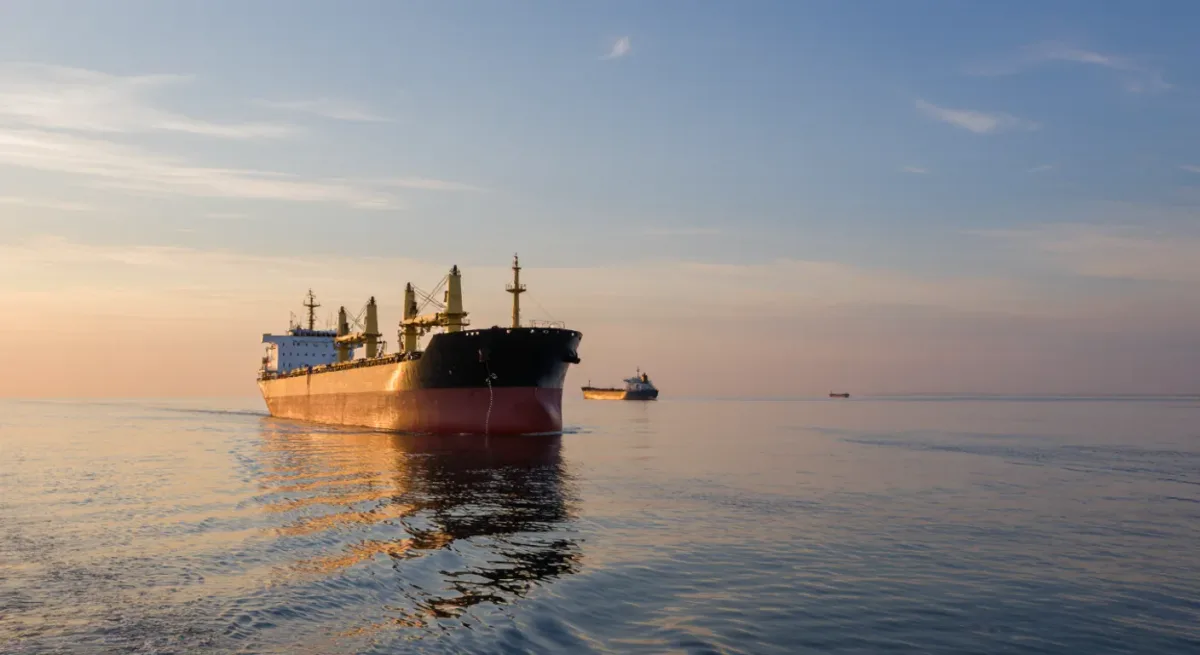
The Strait of Hormuz, the chokepoint for roughly a fifth of the world's oil and a quarter of its liquefied natural gas, was declared indefinitely closed by Iran on February 28 after the United States and Israel opened strikes on the country, and Brent crude surged from the low seventies a barrel toward levels not seen in years as markets priced the first full closure of the strait in modern history. Tehran also fired on communication antennas and radar facilities of the US Fifth Fleet in the initial exchange (Reuters; Al Jazeera, February 28-March 1, 2026).
The trigger sequence was compressed. The strikes on February 28 hit Iranian territory, including nuclear and military sites in the first waves per early damage reporting, and Iran's response came within hours: the closure declaration covering the waterway between Oman and Iran through which the Gulf's crude and LNG exports pass, and the engagement with American naval facility systems in the region. Shipping insurers moved first in practical terms, with war-risk premiums for Gulf transits rising to levels that make many voyages commercially unviable, and tanker owners diverting or holding vessels outside the strait's approaches.
What the market did
Brent closed near 72 dollars on February 27 and gapped higher at the reopen, with intraday moves through the first sessions carrying the benchmark sharply toward and past the 100-dollar level at peaks before settling into a volatile range near 120 dollars as the scale of the disruption became clear. The price action followed the arithmetic of the chokepoint: around 20 million barrels per day of crude and condensate and about a fifth of global LNG transit Hormuz, and no combination of pipelines around it, Saudi Arabia's East-West line to Yanbu and the UAE's Fujairah bypass among them, offsets more than a fraction of that volume.
| Asset | Before (Feb 27) | Early March |
|---|---|---|
| Brent crude | ~$72 | Surging toward $120 at peaks |
| Hormuz war-risk insurance | Elevated | Multiple-fold increase |
The infrastructure at stake
The strait's 30-kilometer-wide shipping corridor carries the exports of Saudi Arabia, Iraq, the UAE, Kuwait, Qatar and Iran itself. The partial bypasses shape what comes next: Saudi Arabia's Petroline can move roughly five million barrels per day to Red Sea terminals, the UAE's Abu Dhabi Crude Oil Pipeline to Fujairah carries about 1.5 million, and Qatar's LNG has no alternative route at all, which is why gas markets repriced even harder than crude. The East Mediterranean exporters, Egypt and Israel among them, sit outside the chokepoint and their relative position improved in price terms even as their physical risk environment worsened.
Who is exposed and how
Asian refiners are the largest immediate losers, drawing the majority of Gulf crude through the waterway, with Chinese and Indian processors holding the deepest alternative-supply relationships, Russian barrels outside the strait among them. European buyers face the rerouting math of long-haul Atlantic and West African grades. For Gulf producers themselves, the closure converts revenue into storage: onshore tanks fill within weeks at interrupted export rates, then production itself must cut back, a sequence the region has rehearsed only at small scale in past confrontations. And the global consumer economy takes the price as inflation, with the pass-through to pump prices and freight rates beginning within weeks.
What to watch from here
Three variables will decide whether this becomes a shock measured in weeks or years. The duration variable: whether the closure hardens into a blockade enforced over months, or relaxes into a risk premium on a waterway that reopens, which past crises, the tanker wars of the 1980s, the 2019 attacks, always eventually delivered. The escalation variable: whether Gulf energy infrastructure beyond the strait itself, export terminals, desalination plants, the LNG complex at Ras Laffan, enters the target set, as early exchanges suggested it might. And the policy variable: the responses of consumer governments, from strategic reserve releases to demand management, and of OPEC+ producers holding the world's spare capacity, most of it on the wrong side of the chokepoint. The meeting the group had already scheduled for March 1 became, overnight, the most consequential oil meeting in years.
The insurance market's instant verdict
The first system to price the closure was not oil futures but marine insurance, and its mechanics deserve their own line. War-risk cover for a Gulf transit is quoted as a percentage of the hull's value per voyage, and the quotes moved within hours from the fractions of a percent that marked the 2023-2024 Red Sea campaign to levels that added millions of dollars to a single tanker's journey, with some underwriters simply declining the Gulf entirely. The consequence is mechanical: a charter that cannot insure cannot sail, whatever the owner's nerve, and the ships that did move through the first days did so on government instructions, naval charters or owners self-insuring through flag-state arrangements. Reinsurance, the layer behind the underwriters, repriced with a lag of days, and energy infrastructure policies, the cover on the terminals and plants themselves, followed the first strikes on facilities with exclusions and renewals that hardened the market region-wide. The lesson the war's first week taught the industry is structural: chokepoint risk is now an insurance phenomenon first and a shipping phenomenon second, and the premium quotes, published daily, became the war's most accurate real-time gauge.
Strategic reserves were the consuming states' immediate answer, with release announcements following within days from the major holders, a response that blunts prices but cannot replace volume.
Read our report on that OPEC+ decision taken the day after the strikes, and follow the energy section for continuing coverage of the disruption.