The cover story looks effortless on the newsstand: one face, one headline, one photograph that seems to sum up a career. In practice it is the most negotiated product in entertainment journalism. A single cover can take months of access discussions, legal review, photo approvals and layout fights before it reaches the reader.
Dictionary.com defines "behind" as "hidden or unrevealed by", and that is the honest description of the work involved — the word carries the sense of something concealed by what sits in front of it. The finished cover hides the pipeline that produced it. This explainer walks through that pipeline, stage by stage, from the first access call to the final proof.
The process matters beyond the magazine itself. Cover stories drive interviews, tour publicity and streaming calendars across the region and beyond, and readers who understand how the feature is made are harder to fool by a soft-soaped one. For more on how regional outlets handle the wider news cycle, see the MENA News section. Readers following this should also see News MENA Region — Who Decides What MENA Reads: Inside a Regional Wire Desk's Day.
What is a cover story, and why does the cover matter so much?
A cover story is the lead feature of an issue, usually the longest and most heavily reported piece in the magazine, and it is tied to the front page image. The cover is the commercial engine of the title. It sells copies on the stand, it sells the issue to advertisers, and in the digital era it supplies the shareable image that carries the story across social platforms.
That commercial weight explains the politics. A cover booking is a prize for the subject's publicity team as much as for the magazine. Publicists trade exclusivity — no competing interviews in the same window — for cover placement and, crucially, some degree of approval. The magazine wants candour; the camp wants control. Every cover story is the record of where that bargain landed.
How does access get negotiated?
Access is the first battle. An editor pitches the subject, usually months ahead, and the publicist counters with conditions: the journalist allowed, the photographer allowed, the location, the time allotted and the topics off the table. A two-hour window on a film set is a common shape. So is a junket-style day of back-to-back interviews that yields little beyond rehearsed lines.
Skilled editors push back where they can. They ask for time with the subject alone, without the publicist in the room, or for a second session closer to publication so the quotes are current. They accept some conditions and refuse others. When the subject's team demands copy approval — the right to read and veto the finished text — most serious publications refuse, because a writer whose copy can be vetoed is writing publicity, not journalism. Some smaller titles do grant it, and readers are rarely told. This connects to our earlier piece, Mena News Agency of Which Country: Why Country Labels Matter When You Read Wire Copy.
What happens during the reporting itself?
The interview is the shortest stage and the least decisive. A good cover feature draws on more than the sit-down: prior interviews, court records where relevant, box office or streaming figures, and conversations with collaborators who are not bound by the subject's publicity plan. The writer is collecting material for a portrait, not transcribing a chat.
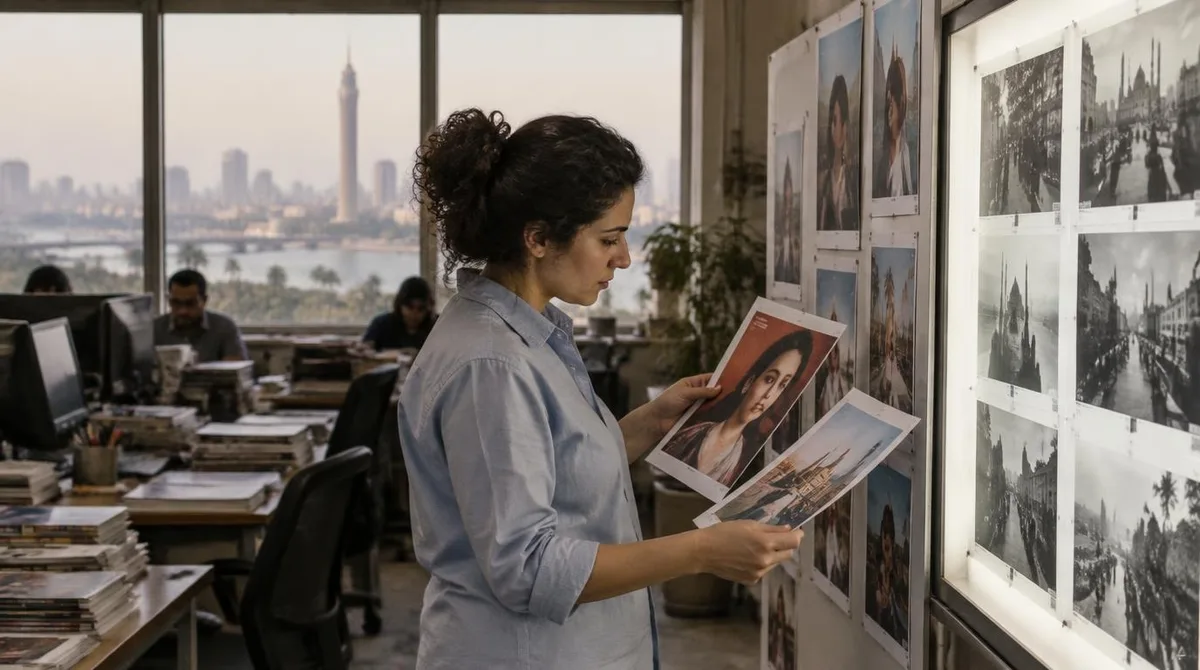
Photography runs in parallel and carries its own negotiations. The subject's team may approve the photographer, the wardrobe and even the final frame selection. A cover shoot with a stylist, a lighting crew and a handler in the room is a production, and the magazine's creative director is running it against a publicist's stopwatch. The pictures that survive are the ones both sides can live with.
Who decides the final layout and the cover line?
Layout is where editorial and commerce collide in full view. The editor wants the words large; the sales team wants room for advertisers; the photo desk wants the image uncropped by type. The cover line — the few words beside the subject's face — is drafted and redrafted, because it must promise the story without giving it away.
Fact-checking and legal review sit in this stretch too. Every quoted figure, every dated claim and every characterisation of a third party gets verified before the issue closes. A cover story that alleges wrongdoing invites lawyers; a cover story that flatters invites nothing but scepticism. The strongest features manage both risks at once, which is why the best of them read as reporting rather than promotion.
What does this mean for readers?
Our analysis: read a cover story as a negotiated document, and the negotiations leave fingerprints. Vague sourcing, a single setting and a subject quoted only in superlatives usually signal a tightly managed access deal. Named sceptics, concrete numbers and a writer's own scene-setting signal a magazine that kept some independence.
Dictionary.com's entry notes a second sense of the word — being behind something can also mean supporting it, as in standing behind a campaign. That double meaning fits the form. A cover story is always partly hidden work and always partly an act of support: the magazine lends its prestige, the subject lends access, and the reader gets whatever truth survived the bargain.
The same scrutiny applies to how any outlet presents its features. Readers who want a framework for judging regional coverage can consult the site's guide to trusting regional sources, and those curious about the print side of the trade will find the wider context in the explainer on the newspaper business in the Arab world.
The takeaway
A cover story is a months-long negotiation compressed into a single image and a few thousand words. Access is traded, photography is staged under supervision, copy is checked rather than censored, and layout is argued over to the last millimetre. Knowing the pipeline does not ruin the feature. It tells the reader which parts to trust and which parts are the publicist's handiwork.